
Morocco is among the world's great photography destinations: extraordinary light, vivid colours, ancient architecture and a landscape that shifts from blue city lanes to red dunes within a day's drive. Knowing where to go, when, and how to engage respectfully makes all the difference.
Updated June 2026 · 4 min read · Culture
Best locations and light
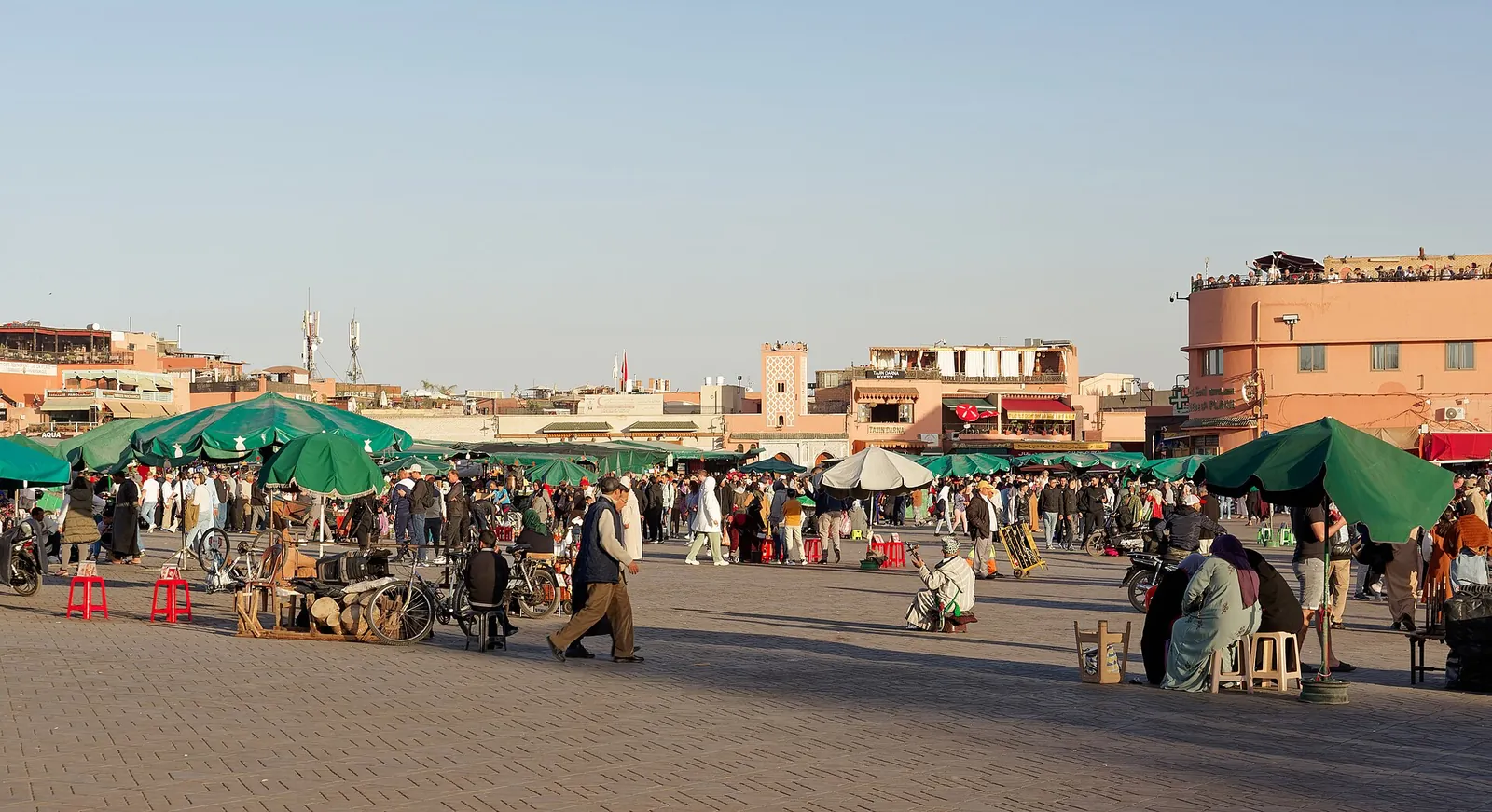
The Chouara tanneries in Fes are the iconic shot — best from the terrace of a leather shop overlooking the vats, in the morning when the light falls directly into the basins. The Jemaa el-Fnaa square in Marrakech earns its reputation at sunset and in the blue hour after, when the smoke from the food stalls and the calls to prayer converge. Chefchaouen's blue-washed lanes photograph most beautifully from mid-morning before the tour buses arrive, and in the warm light of late afternoon.
For the Sahara, the hour after sunrise and the hour before sunset are the canonical times — the dune shadows are long and the light is golden. The golden-orange of Merzouga's Erg Chebbi dunes in that light is as vivid as it appears in photographs. The Aït Ben Haddou kasbah photographs extraordinarily in the late afternoon from the opposite riverbank. In Casablanca — where most photographers arrive — the Hassan II Mosque is at its most dramatic at sunset, when its 210-metre minaret catches the last light over the Atlantic, while the Mauresque and Art-Deco facades of the downtown around Place Mohammed V reward an early-morning walk before the traffic builds.
Medina etiquette and photographing people
The single most important rule: ask permission before photographing people, every time. A Moroccan man in a spice souk, a woman at a loom, children playing in a lane — each deserves the choice. The Arabic to use is 'mumkin sura?' (may I take a photo?). Many will say yes with pleasure; some will ask for a small fee — MAD 5–20 is fair and generous; some will decline, and that decision must be respected without argument.
Street photography in the candid western tradition sits uneasily in Morocco's medinas. Long lenses that allow unnoticed shooting of people who would decline if asked are widely considered disrespectful — and in some cases have caused real friction. The most rewarding portraits come from connection, not distance: take the time to talk, share a tea if invited, and the resulting images reflect that.
Gear and practical notes
The medinas and souks are tight spaces: a versatile zoom (24–70mm equivalent) or a mid-range prime is more useful than a long telephoto. Dust in the Sahara is pervasive — bring a sealed camera bag and lens cloths, and change lenses sparingly outdoors. A polarising filter for the desert is useful but not essential. The Moroccan sun is intense: shade your lens to avoid flare, and protect your camera from direct sun when not shooting.
- Bring extra batteries — cold desert nights drain them faster than expected.
- A small tripod or gorilla pod pays off for dawn dune shots and blue-hour medina scenes.
- Phone cameras, particularly with computational photography, perform remarkably in the Moroccan light — don't feel obliged to carry heavy gear.
- Keep your camera discreet in the Jemaa el-Fnaa area, where performers and henna artists expect payment for being photographed.
Drone rules in Morocco
Drone operation in Morocco requires authorisation from the Moroccan Civil Aviation Authority (DGAC). Flying without a permit is illegal, and drones have been confiscated at customs and in the field. The process for obtaining authorisation is bureaucratic and time-consuming. For most travellers, the advice is to leave the drone at home — Morocco's landscape is extraordinary enough at ground level, and the legal risk is not worth it.