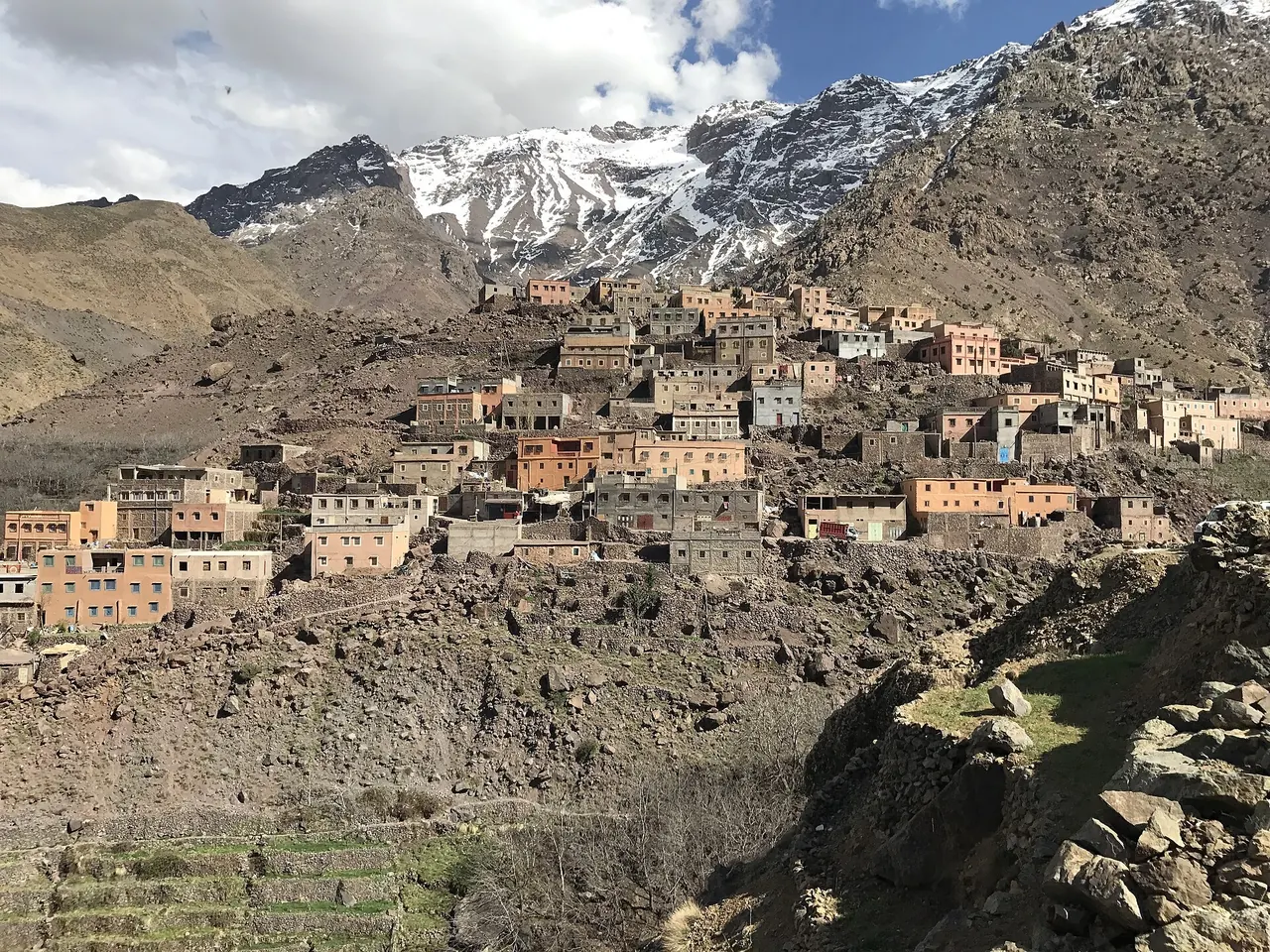

The High Atlas rises to 4,167 metres at Jbel Toubkal, North Africa's highest peak — a 90-minute drive from Marrakech, itself a short train hop or transfer from your Casablanca (CMN) arrival. Whether you want a single-day walk from Imlil, a multi-day village traverse or a summit attempt, the Atlas rewards it, with the right season, guide and preparation.
Updated June 2026 · 5 min read · Planning
What is the best time of year to trek in the Atlas Mountains?
April to June and September to October are the prime trekking windows in the High Atlas. Temperatures on the mountain are comfortable, the snow on the upper reaches has melted (or melting) and the lower valleys are green and flowered. July and August are possible but hot on the lower trails and busy; snow and ice on Toubkal's summit persist into May some years, making crampons necessary until it clears.
Winter trekking (December–February) is spectacular if you have the equipment and experience — Toubkal under snow is genuinely beautiful — but requires an ice axe, crampons and a guide with mountaineering experience. Several guiding companies offer guided winter ascents. Spring melt (late February to March) makes some paths muddy and stream crossings wet.
Jbel Toubkal — summit route and difficulty
Toubkal (4,167 m) is the standard summit target and is achievable by fit, acclimatised hikers without technical climbing experience — but it demands respect. The standard two-day route begins in Imlil village (1,740 m), climbs to the Toubkal Refuge (3,207 m) on day one (3–4 hours), and continues to the summit on day two (3–4 hours up, 2–3 hours down). The terrain above the refuge is rocky scree with no path marking; a guide is legally required and practically essential.
Altitude is the main challenge. Many visitors coming from sea level find the altitude uncomfortable above 3,500 m — headaches, breathlessness and fatigue are common. Ascending slowly, spending a night at the refuge to acclimatise, and being willing to turn back if symptoms worsen are the principles. Heart and respiratory conditions should be assessed by a doctor before attempting the summit.
- Physical level required: good fitness, comfortable with 5–7 hours of walking per day over rough terrain.
- Best months for summit: May–October (snow-free); crampons and ice axe needed November–April.
- Hiring a guide and mule: compulsory for the Toubkal summit; mules carry packs to the refuge and free you for the summit push.
- Altitude above the refuge (3,207 m–4,167 m): rocky, steep scree; no technical climbing but demanding.
Multi-day treks from Imlil
Imlil is the main gateway village and a 90-minute drive from Marrakech. Beyond the Toubkal ascent, the Atlas offers excellent multi-day traverse routes that visit Berber villages, walnut groves and hidden valleys. The classic 3-day route links Imlil, Tacheddirt and Amsouzart, or you can cross the Tizi n'Ouanoums pass into the Azzaden Valley for a wilder, less-visited circuit. These village-to-village treks use local gîtes (simple mountain lodges) for accommodation — basic but warm, with a communal dinner cooked over a wood fire.
A 5-day circuit can combine Toubkal's summit with the village traverse, returning via different valleys. Custom routes are readily arranged by the licensed guide associations based in Imlil; the Mountain Guides Association office is at the village trailhead. Guide fees and mule hire for packs are agreed in advance; if we arrange the trek, we send a fixed written quote within 24 hours.
Day hikes from Imlil
Not every Atlas visit needs to be an overnight expedition. From Imlil, several excellent half- and full-day walks require no specialist equipment or physical conditioning beyond a reasonable level of fitness. The hike up the Ait Mizane valley to the village of Sidi Chamarouch (a Berber shrine) takes around 3–4 hours return and gives a strong taste of the mountain landscape. The Tizi n'Mzik pass (2,489 m) is reachable in a long half day and offers panoramic views toward Toubkal. Most day walks can be done without a guide, though one adds context and navigation confidence significantly.