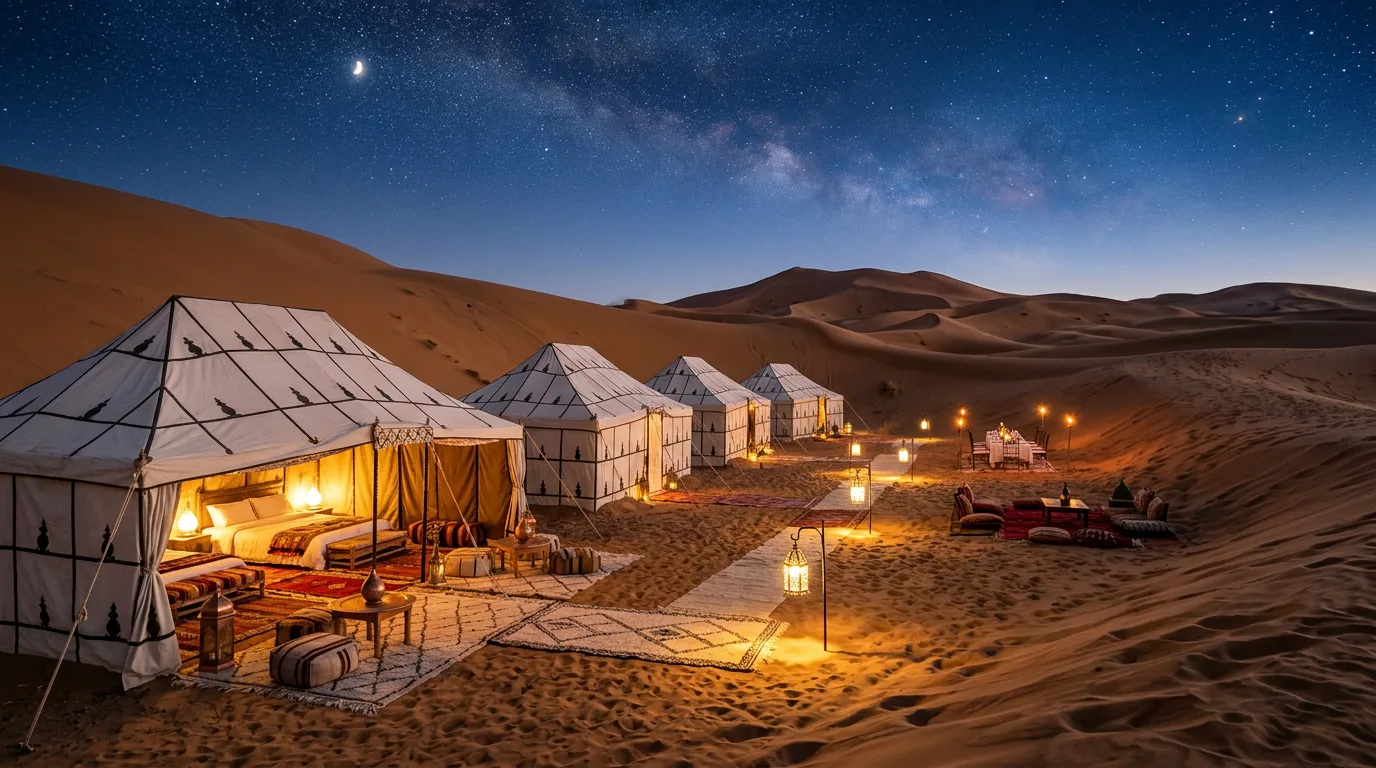
It is a long way from the Casablanca arrivals hall to the dunes — down to Marrakech, over the High Atlas, through the kasbahs of the south — but nothing in Morocco quite prepares you for the night that waits at the end of it. The silence is absolute. The sky, once your eyes adjust, contains more stars than most people have seen in a lifetime. The cold — because it will be cold, even in spring — makes the morning tea inside the tent feel like the finest luxury. Here is exactly what to expect.
How camps are set up
A Moroccan desert camp is a cluster of large canvas or Berber-style tents arranged in a horseshoe or crescent, typically placed out of sight of any road or village, with the dunes rising directly behind. At the best camps, each tent is a proper room: an iron bed frame with a real mattress, cotton sheets, reading lights, a mirrored vanity, and an ensuite bathroom with a flushing toilet and a hot shower fed by an on-site boiler.
Mid-range camps have solid wooden beds but share bathroom blocks between four to six tents. Budget camps use thinner mattresses on the ground and composting facilities. The price difference between tiers is significant — plan to spend US$180–350 per person at a genuine luxury camp, US$60–130 at mid-range — and the comfort difference is equally significant.
Getting there: camel or 4WD?
The classic approach is by camel at sunset. Your guide leads the camel from the ground; you sit in a wooden saddle with a blanket and ride for 30–50 minutes into the dunes as the sky turns amber and crimson. It is slow, slightly uncomfortable and completely magical. At the crest of a dune you dismount, and the silence of the erg opens around you.
The 4WD option is faster and more comfortable — some guests prefer it, especially with young children or if they have back problems. Departure at dawn by 4WD is also the most practical choice when you need to reach your next destination early. Our Sahara tours include both options.
Temperature and what to pack
The Saharan temperature swing is remarkable. At Merzouga in October, you might wear shorts at 2 pm and a down jacket by 8 pm. Between November and February, night temperatures at the camp regularly fall to 3–8 °C — cold enough to make a proper sleeping bag worthwhile even inside a luxury tent. Luxury camps provide duvets and extra blankets; a few have electric under-carpet heating.
- Warm layers: fleece, down jacket, hat and gloves for November–February.
- Headtorch — even lit camps have dark paths between tents.
- Sunscreen and sunglasses for the next morning in the dunes.
- Sandals for inside the tent; your shoes will fill with sand.
- Cash for tips — the camp manager usually distributes collectively.
Dinner under the stars
At a luxury camp, dinner is served in a large communal tent or around an open fire — usually a four-course spread: harira (tomato and lentil soup), a starter pastilla or salad, a slow-cooked tagine or mechoui (whole roasted lamb), then almond pastries with the inevitable mint tea poured from a height. The food is genuinely good. Vegetarian and dietary requirements are accommodated easily; advise in advance.
After dinner, the camp's maalem (Gnaoua musician) typically plays for an hour around the fire. The combination of fire, music, cold air and open sky is not something you reproduce at home.
Dawn in the dunes
Wake-up calls at 5:30 am are not a punishment — they are the point. The light at dawn in Erg Chebbi moves from deep purple to rose-gold in around twenty minutes. Walking to the top of the nearest dune before sunrise, with a thermos of coffee your guide has somehow produced, is the image most guests take home as their defining memory of Morocco.
Sandboarding — using a wooden board to slide down the face of a dune — is available at most camps and is excellent. The climb back up is not. Read more about Erg Chebbi and the surrounding Merzouga region.
How to choose the right camp
The desert camp market is unregulated and marketing photographs are unreliable. A tent labelled "luxury" in a brochure can mean anything from a genuine ensuite setup to a single mattress behind a canvas partition. The safest approach is to book through an operator who physically inspects the camps they use — or to ask directly: is the bathroom ensuite or shared? Is there a real mattress on a bed frame? Is there hot water? A good operator will answer all three without hesitation.
Frequently asked
What is it actually like sleeping in a Sahara desert camp?
Inside a well-run luxury camp you bed down in a proper bed within a large canvas tent fitted with electric lighting, an ensuite bathroom and, come winter, a small heater. What strikes you most is the near-total silence, cut only by wind moving across the dunes. Dawn is the payoff: you wake to cold air, a deep blue sky and a sea of sand with barely another soul in sight.
How cold does it get in the Sahara at night?
Colder than you'd guess. From November to February, overnight temperatures at Merzouga and M'Hamid routinely fall to 3–8 °C and now and then brush freezing. Luxury camps lay on blankets, duvets and at times underfloor heating. Bring a warm layer whenever you go — the desert temperature swings sharply between day and night.
Are there proper bathrooms in luxury desert camps?
At the genuinely luxury camps, yes — ensuite flushing toilets, hot showers and proper basins. Mid-range camps run shared bathroom blocks with running water as standard. Basic budget camps may rely on composting or bucket toilets. Always pin down exactly what your operator means by 'ensuite' before you book.
How do you get to a desert camp from Merzouga?
Most Erg Chebbi camps lie a 20–40 minute camel ride from the edge of Merzouga village, or under ten minutes away by 4WD. Your camp will come to meet you at an agreed point. Rolling in by camel at sunset is the classic way to arrive; 4WD comes into play for early-morning departures or when guests have mobility concerns.
What food is served at a Moroccan desert camp?
Dinner at luxury camps usually runs to a four-course Moroccan feast: harira soup, a pastilla or salad starter, tagine or mechoui (slow-roasted lamb), then pastries with mint tea. Breakfast lands as the sun climbs over the dunes — bread, honey, argan oil, eggs and coffee. For somewhere this remote, the quality is genuinely impressive.
Is a one-night stay in the desert enough?
A single night covers the heart of it: sunset over the dunes, a night sky you'll find nowhere else, and a camel ride at dawn. A second night buys you a full day in the erg — room to range further, try sandboarding, or just sit. We seldom suggest fewer than one night, and seldom more than two unless you're set on a multi-day camel trek.
From the gateway to the dunes
We only use camps we have personally visited and vetted.
From your Casablanca landing to the sand, every Casablanca Tours desert overnight includes private camel transfer, a full dinner, sunrise excursion and an ensuite tent — no surprises at check-in.
Request an itinerary