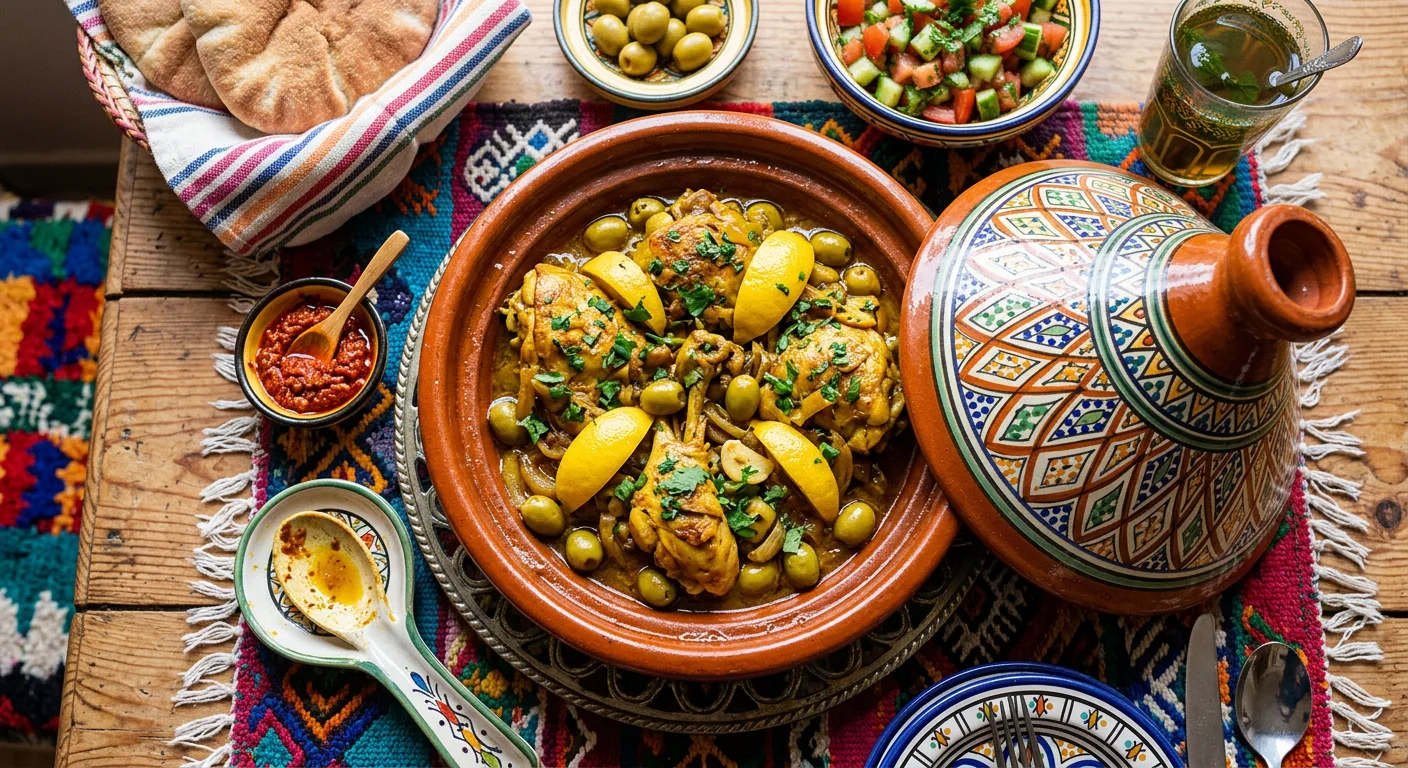
Travellers arrive in Casablanca expecting tagine and couscous, and they will find both — this is still Morocco. But Casablanca is not a medina city living on inland recipes. It is a working Atlantic port and the country's commercial capital, and it eats like one: grilled fish and fried calamari, sardines off the boats, shellfish on ice, and a café and brasserie culture inherited from the French colonial decades that exists nowhere else in the country on the same scale. If you want to understand Casa through its food, start with the sea and the city's restless, cosmopolitan mix — and treat the tagines as the bonus.
The Atlantic catch: fish, sardines and calamari
Seafood is the heart of eating in Casablanca. The Atlantic delivers daily, and the local style is deliberately unfussy: whole fish grilled over charcoal, calamari and prawns fried in a light batter, and sardines — often butterflied, stuffed with chermoula (a herb, garlic, cumin and paprika marinade), pressed together in pairs and fried or grilled. A good plate of Casablanca seafood is fish, a wedge of lemon, bread and salad, and very little else. The freshness does the work.
Look out for friture — a mixed fried platter of small fish, calamari and shrimp — which is the city's casual seafood standard, and for the larger grilled fish (sea bass, sea bream, sole) when you want to sit down properly. The lagoon town of Oualidia, a couple of hours down the coast, is Morocco's oyster capital, and its oysters make their way onto the better Casablanca tables — the local luxury worth ordering when you see them.
The Marché Central: pick your fish, have it cooked
The single most Casablanca thing you can do with food is go to the Marché Central (the central market) off Boulevard Mohammed V in the Art Deco centre. You walk the fishmongers' stalls, choose your fish from the morning's catch, and a nearby stall or small restaurant grills or fries it for you on the spot — served plainly with bread, salad and a little sauce. It is fresh, informal and about as direct as eating gets. Our guides can walk you through the market.
A few honest pointers: prices for the fish are by weight and should be agreed before it is cooked, the cooking charge is separate and small, and lunchtime is when the place is busiest and freshest. We name the Marché Central as a real, general place to head for — not a specific stall — because which counter is best genuinely changes with the day's catch.
The port and the Sqala: seafood with the Atlantic in view
For seafood eaten near the water, the port area and the Sqala — the old Portuguese-era bastion at the edge of the medina, now a walled garden setting — are the well-known places to go. The appeal is the combination: simple, well-handled fish and the sense of being on the Atlantic edge of the city rather than inland. As ever, eat what is fresh that day rather than chasing a fixed dish.
Café and brasserie culture: the French-colonial table
Casablanca's café culture is unmatched in Morocco. The French colonial period left the city with grand pavement cafés, brasseries and a habit of lingering over coffee that never went away. Around the Art Deco centre and along the seafront, terraces fill from breakfast onward — espresso, café cassé (coffee cut with a little milk), fresh orange juice and the ever-present glass of mint tea. The brasserie tradition means you can also eat a plate of oysters or a steak frites in a way that feels more Mediterranean port than Moroccan medina.
Pâtisseries carry the same dual identity: French-style cakes and viennoiserie alongside Moroccan pastries — kaab el ghzal (gazelle horns, almond-filled crescents), chebakia (sesame-and-honey knots, especially at Ramadan) and savoury briouat. With a pot of mint tea, these are the city's standard afternoon ritual. Read our full Casablanca destination guide.
Street food: sardine sandwiches, bocadillos and snail soup
Casablanca's street food is fast, cheap and tells you exactly how international the city is. The sardine sandwich — fried sardines or chermoula-stuffed sardines packed into bread with salad and harissa — is the coastal classic. The bocadillo, a filled baguette whose name comes straight from Spanish, reflects the Atlantic coast's Iberian influence; you'll find them stuffed with tuna, egg, fried fish, kefta or merguez.
In the cooler months, look for babbouche — snail soup ladled from steaming cauldrons, sipped from a glass with a pin to fish out the snails and a peppery, herbal broth drunk afterwards as a tonic. Add griddle carts turning out msemen (flaky square flatbread) and harcha (semolina pan-bread), plus skewers of grilled meat, and you have a lunch culture built for a working city. We can build a street-food walk into your day.
Modern Moroccan and the international scene
As the country's economic capital, Casablanca also has its most ambitious dining: modern Moroccan kitchens reworking tagine, pastilla and seafood with a lighter, contemporary hand, sitting beside Italian, French, Lebanese, Japanese and Spanish restaurants. This is the one Moroccan city where an evening out might just as easily be sushi or a brasserie plateau de fruits de mer as a traditional set menu — and where a fine-dining take on Atlantic seafood feels completely at home. It is the most international food scene in Morocco, and that range is the point of eating here.
Frequently asked
What food is Casablanca known for?
Casablanca is, above all, a seafood city. Sitting on the Atlantic, it lives off grilled fish, fried calamari, sardines and shellfish, often eaten plainly with a wedge of lemon and a little chermoula. Beyond the catch, the city is Morocco's most cosmopolitan table — French-colonial brasseries and café culture sit alongside modern Moroccan fine dining and a busy street-food scene. The national staples (tagine, couscous, mint tea) are everywhere too, but the thing that makes Casa distinct is the sea and the international mix.
Where do you eat fresh fish in Casablanca?
The classic move is the Marché Central (the central market) off Boulevard Mohammed V: you choose your fish from the fishmongers and a nearby stall or small restaurant grills or fries it for you, served simply with bread and salad. The port area and the Sqala district are the other well-known places to eat seafood with the Atlantic in view. We frame these as real, general places rather than recommending any one named stall, because turnover and quality vary day to day.
Is Casablanca a good city for street food?
Yes. The street scene reflects the city's mixed character: sardine sandwiches and fried-fish rolls, bocadillos (a Spanish-influenced filled baguette), babbouche (snail soup) sold from steaming cauldrons in winter, msemen and harcha from griddle carts, and skewers of grilled meat. It is cheap, quick and genuinely local — settle the price before you order and follow the queues of office workers at lunchtime.
What is bocadillo and why is it eaten in Casablanca?
A bocadillo is a filled baguette-style sandwich — the name and the format are a direct echo of Spanish influence on Morocco's Atlantic coast. In Casablanca you'll find them stuffed with everything from tuna and egg to fried fish, kefta or merguez, with harissa, olives and salad. They are a staple of the quick lunch trade and a good example of how the city's food borrows from across the Mediterranean and Atlantic.
Can you get oysters near Casablanca?
Yes — the lagoon town of Oualidia, a couple of hours down the coast, is Morocco's oyster capital, and its oysters travel up to Casablanca's better seafood restaurants. If you are eating well in the city, Oualidia oysters are the local luxury to look for, usually served simply on ice with lemon.
Does Casablanca have a café and brasserie culture?
Strongly. The French colonial period left Casablanca with grand cafés, pavement terraces and brasseries, and the habit stuck. Sitting over a coffee or a glass of mint tea and watching the city go by is part of daily life here, especially around the Art Deco centre and the seafront. Pâtisseries selling both French-style cakes and Moroccan pastries (kaab el ghzal, chebakia, briouat) are everywhere.
From the market to the table
Eat Casablanca the way the city does — from the fish market to the brasserie terrace.
Casablanca Tours curates half-day and full-day food experiences around the Marché Central, the port, the Art Deco café district and the city's modern Moroccan kitchens for guests who want to taste Casa, not just photograph it.
Enquire about a food experience