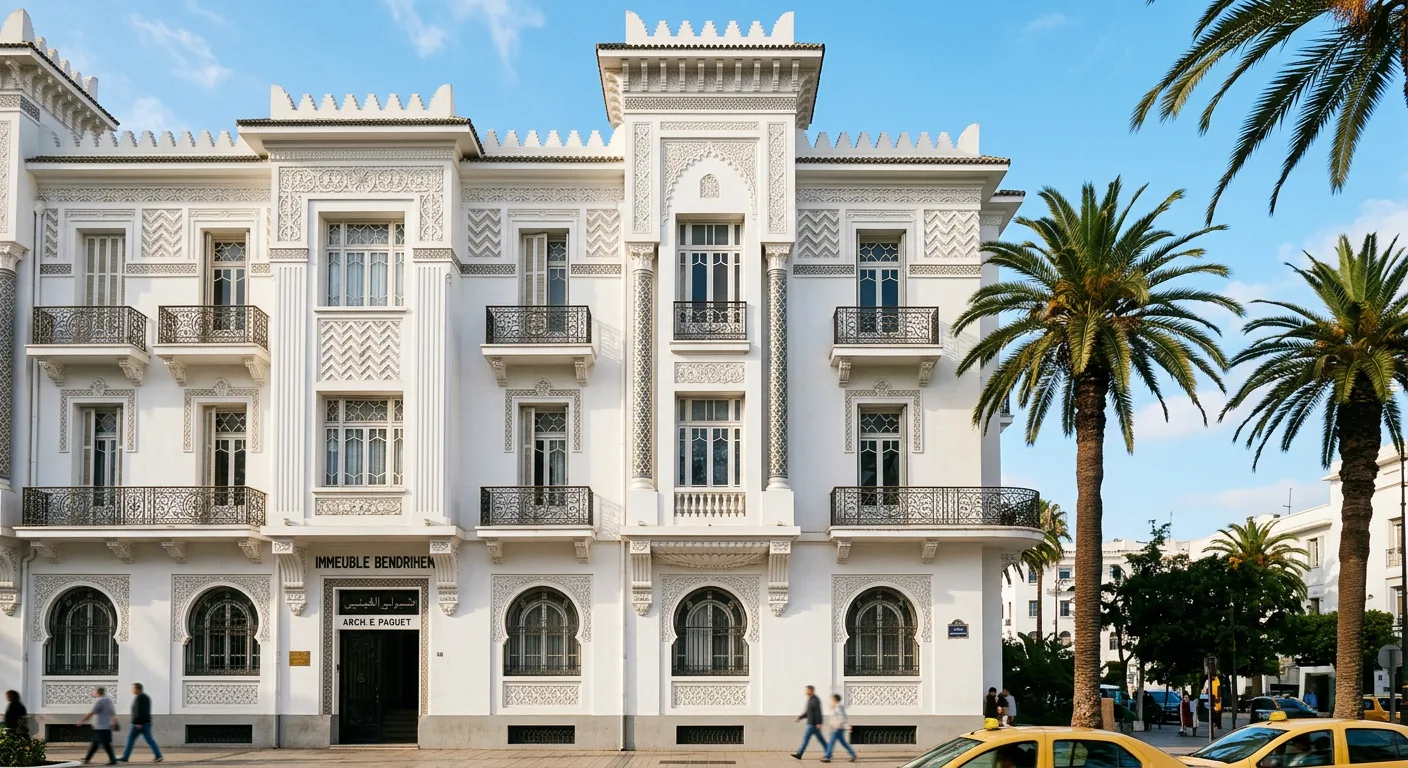
Morocco has a long, officially recognised Jewish heritage stretching back many centuries, and Casablanca holds a central place in that story. The city is home to the Museum of Moroccan Judaism — widely described as the only museum dedicated to Jewish history and culture in the Arab world — and to one of Morocco's largest remaining Jewish communities, with active synagogues and a historic mellah (Jewish quarter). This guide explains what to see and how to explore it respectfully, with practical notes; hours and access change, so confirm details locally before visiting.
The Musée du Judaïsme Marocain is the centrepiece of Casablanca's Jewish heritage and is often cited as the only museum dedicated to Jewish history in the Arab world. It documents the long story of Moroccan Jewish life through religious objects, traditional costumes, jewellery, photographs and reconstructed synagogue interiors. Allow time to take in the collection; check current opening hours before you go, as it is often closed on Saturdays for Shabbat.
02About
The collection & why it matters
The museum's holdings include Torah scrolls and ritual artefacts, embroidered ceremonial clothing, household and synagogue objects, and a photographic record of Jewish communities across Moroccan cities and villages. Together they preserve the memory of a community woven into Moroccan life for generations, making the museum significant well beyond Casablanca as a record of Jewish heritage in the wider region.
03Practical
Where it is located
The museum sits in a residential district in the southern part of Casablanca, away from the main downtown and tourist sights, so it is usually reached by taxi rather than on foot from the centre. Because it is set among quiet streets, it helps to confirm the address and current hours in advance and to allow a little extra travel time.
04Landmark
Temple Beth-El & the synagogues
Casablanca has several active synagogues, of which Temple Beth-El is among the best known, noted for its stained glass and as a focal point of community life. These are living places of worship rather than tourist attractions, so any visit is generally made by prior arrangement and in a respectful manner; ask locally or through a guide about whether and when access is possible.
05History
The old mellah
The mellah — the historic Jewish quarter — lies near the old medina and recalls the centuries when Jewish and Muslim communities lived side by side in Moroccan cities. Today it is a working neighbourhood whose layout and surviving buildings hint at that shared past; walking through it gives a sense of the community's place in the city's history.
06About
A living community
Casablanca is home to one of the largest remaining Jewish communities in Morocco, with synagogues, community institutions and kosher facilities still in use. This is a small but continuous community whose presence makes the city's Jewish heritage a living tradition rather than only a historical memory.
07Context
Morocco's broader Jewish heritage
Morocco's Jewish heritage is centuries old and officially recognised, with historic Jewish quarters, cemeteries and pilgrimage sites in cities such as Fes, Marrakech, Essaouira and Rabat. Casablanca's museum and community fit within this wider national story, and many visitors interested in the subject combine the city with heritage sites elsewhere in the country.
08Etiquette
Visiting respectfully
Synagogues and community sites are places of worship and remembrance. Dress modestly, follow any guidance from staff or community members, ask before photographing people or interiors, and be mindful of religious observance, including Shabbat from Friday evening to Saturday evening. A respectful approach is both expected and appreciated.
09Practical
Going with a guide
Because some sites are visited by arrangement and are spread across the city, a knowledgeable local guide can make a Jewish heritage visit smoother — helping with access, context and timing. Guides can also place what you see within Morocco's wider history, which adds depth to the museum and the mellah.
10Itinerary
Combining with the city
A Jewish heritage visit pairs naturally with a broader Casablanca day. Many travellers combine the museum with the Hassan II Mosque, the Art Deco downtown around Place Mohammed V, the old medina and the Ain Diab corniche, building an itinerary that reflects the city's layered history and its different communities.
Frequently asked
What is the Museum of Moroccan Judaism in Casablanca?
The Musée du Judaïsme Marocain is a museum dedicated to the history and culture of Moroccan Jews, often described as the only museum of its kind in the Arab world. Its collection includes religious objects, traditional costumes, photographs, Torah artefacts and reconstructed synagogue interiors. It is located in a southern district of Casablanca; check current opening hours before visiting, as it is often closed on Saturdays.
Can tourists visit the synagogues in Casablanca?
Casablanca has several active synagogues, including the well-known Temple Beth-El, but these are living places of worship rather than tourist sites. Visits are generally made by prior arrangement and in a respectful manner, so it is best to ask locally or through a guide about whether access is possible and to dress modestly and follow any guidance given.
What is the mellah in Casablanca?
The mellah is the historic Jewish quarter, located near the old medina. It recalls the long period when Jewish and Muslim communities lived alongside one another in Moroccan cities. Today it is a working neighbourhood, but its streets and buildings still reflect that shared history, and it is part of the city's broader Jewish heritage.
Does Casablanca still have a Jewish community?
Yes. Casablanca is home to one of the largest remaining Jewish communities in Morocco, with active synagogues and community institutions. Morocco's Jewish heritage is centuries old and officially recognised, and Casablanca remains an important centre for it, making the city's Jewish history a living tradition rather than only a memory of the past.
See it with a local
Turn this into a private Casablanca trip.
We'll build a private, guided plan around the experiences you care about — with a driver, hand-picked riads and a written quote in 24 hours.