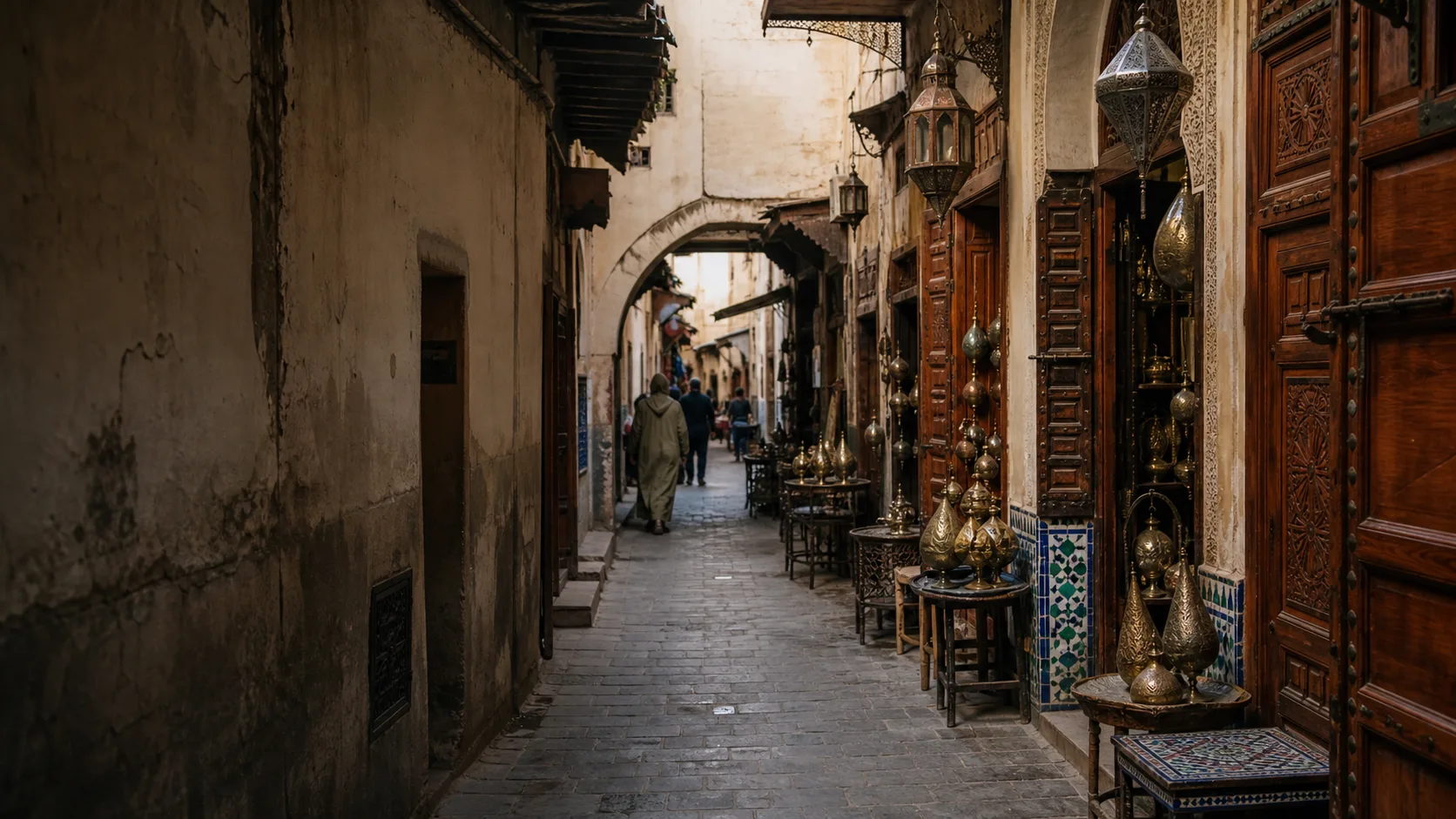
Old Medina vs Habous Quarter: Casablanca's Two Medinas Compared
Casablanca has two very different 'medinas' — the weathered Old Medina near the port and the orderly, French-built Habous quarter (the 'new medina'). They sit minutes apart yet feel like different worlds.
Casablanca confuses first-time visitors with two places that both get called a 'medina', and they could hardly be more different. The Old Medina is the city's original walled quarter, tucked between the port and the wide United Nations Square (Place des Nations Unies). It is small, weathered and unpolished — an everyday neighbourhood market where locals shop for food, clothes, watches and hardware rather than souvenirs. The Habous quarter, often called the 'new medina' (Quartier des Habous), is the opposite in spirit: built by the French in the 1920s and 1930s in a tidy neo-Moorish, or Mauresque, style, it lays out traditional Moroccan crafts along orderly arcaded lanes, with the ornate Mahkama du Pacha and the gates of the Royal Palace close by. One is a slice of older, rougher Casa; the other is a planned, charming district made for browsing. Both are quick to visit and quite different in feel.
Option A
Old Medina
The original walled town near the port — gritty, lived-in and atmospheric
Best for
Travellers wanting a raw, everyday Casablanca and an easy stroll near the centre
Old MedinaGritty, lively and authentic; a working local market, less touristy
Habous QuarterCalmer, cleaner and charming; easy to wander at a relaxed pace
What to do & buy
Old MedinaEveryday goods — food, clothes, hardware; people-watching and a glimpse of older Casa
Habous QuarterCrafts (babouches, brass, carpets), olives, and the famous Bennis pâtisserie & booksellers
Nearby sights
Old MedinaSteps from the port and United Nations Square in the city centre
Habous QuarterThe ornate Mahkama du Pacha and the Royal Palace gates are close by
Tidiness & ease
Old MedinaRougher and more crowded; watch your bearings, but compact and central
Habous QuarterOrderly and walkable; low souk pressure and gentle browsing
Who it suits
Old MedinaCurious travellers after a raw, everyday slice of the city
Habous QuarterShoppers, photographers and anyone wanting crafts and sweets without the hustle
Our verdict
Which should you choose?
These are complementary half-stops rather than rivals, and you can comfortably see both in a morning. Head for the Old Medina if you want a gritty, authentic everyday quarter near the port — a glimpse of older Casablanca with food, clothes and hardware stalls rather than souvenirs. Choose the Habous quarter if you are drawn to orderly neo-Moorish architecture, want to shop for crafts like babouches, brass and carpets, or simply fancy olives and pastries from Bennis in calm arcaded lanes. With a little time, pair them: browse the Habous for crafts and sweets, then dip into the Old Medina for atmosphere on your way back towards the port and the city centre.
What is the difference between Casablanca's Old Medina and the Habous quarter?
The Old Medina is the city's original walled quarter near the port — weathered, lived-in and an everyday local market. The Habous quarter, or 'new medina', was built by the French in the 1920s–30s in a neat neo-Moorish style and is geared towards crafts, sweets and relaxed shopping. The Old Medina feels raw and authentic; the Habous feels orderly and charming.
Why does Casablanca have two medinas?
The Old Medina is the historic walled town that predates the French protectorate. As the city grew rapidly in the early 20th century, the French laid out the Habous quarter (Quartier des Habous) as a planned 'new medina' in a neo-Moorish style — keeping a traditional Moroccan feel while imposing tidy arcades and an orderly street grid.
Which is better for shopping and crafts?
The Habous quarter is the better choice for crafts and gifts. Its arcaded lanes are known for babouches (leather slippers), brassware, carpets and olives, plus booksellers and the famous Bennis pâtisserie for Moroccan sweets. The Old Medina is more of an everyday market for food, clothes and hardware than a souvenir destination.
Is the Old Medina worth visiting in Casablanca?
Yes, if you want a glimpse of older, rougher Casablanca. It is compact, central and atmospheric — a real working neighbourhood near the port rather than a polished tourist site. It is less manicured than the Habous, so go with an open mind and keep an eye on your belongings as you would in any busy market.
Can I visit both the Old Medina and the Habous quarter in one day?
Easily. Both are quick half-stops and sit only minutes apart in central Casablanca, so many visitors pair them with the Hassan II Mosque and the Art Deco downtown in a single day. A relaxed approach is to browse the Habous for crafts and sweets, then walk through the Old Medina near the port for contrast.
Ready to book?
Let a Casablanca-based team build your itinerary.
Tell us which destinations you want to combine and we'll send a written itinerary and a transparent quote within 24 hours.