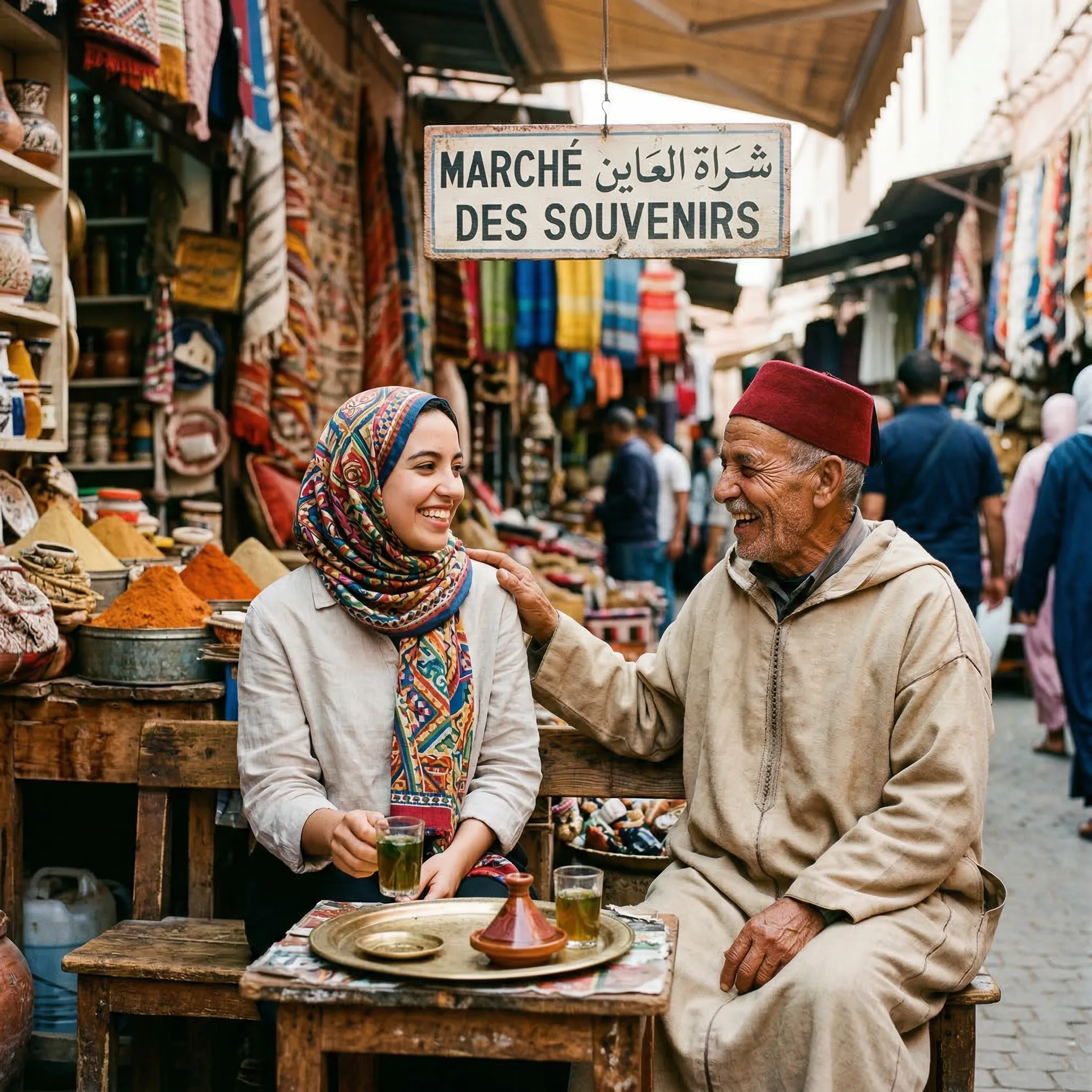
Nearly every festival trip begins the same way: a landing at Casablanca, the country's main gateway, then onward by train or road to wherever the music is playing. The gateway city has its own draws too — Jazzablanca each spring and the L'Boulevard urban-music festival both fill Casablanca's venues. Morocco's wider festival calendar is anchored by three forces: the Islamic lunar calendar (Ramadan and Eid al-Adha shift by roughly eleven days each year), the agricultural harvest cycle, and a growing international arts scene. Timing a visit around a major event transforms a good trip into a remarkable one.
January – March: the quiet season
The first quarter is Morocco's quietest period — ideal for unhurried medina exploration and private tours without crowds. When Ramadan falls in early spring (as it does cyclically), the evening atmosphere in cities like Marrakech and Fès becomes electric after sunset — packed street cafés, live music and communal iftar meals. Book accommodation well ahead during Ramadan as domestic travel peaks.
April – May: the rose harvest and moussems
The Fête des Roses in Kelaat M'Gouna (Dadès Valley) is one of Morocco's most photographed events — fields of Damascus roses in bloom, a harvest parade, and artisan stalls selling rose water, oils and jams. The festival runs for a weekend in mid to late May; day-trip access from Ouarzazate or Boumalne Dades is straightforward, but overnight in the valley is strongly recommended.
April also sees smaller regional moussems begin to appear — pilgrimage festivals at local saints' tombs combining religious ceremony, horse fantasia (tbourida) and regional markets. Ask your guide about any moussem near your route; they are rarely advertised internationally but are deeply moving to witness.
June: Gnaoua and Sacred Music
June hosts Morocco's two most internationally renowned festivals within days of each other. The Gnaoua World Music Festival in Essaouira draws around 500,000 visitors over four days. Gnaoua is a trance-based healing music tradition rooted in sub-Saharan Africa, and the festival pairs master musicians (maalemeen) with jazz, blues and global artists for outdoor stage concerts that are entirely free to attend.
The Fès Festival of World Sacred Music runs for ten days in June, using the UNESCO-listed medina as its stage. Performances span Sufi chanting, Andalusian classical music, gospel, Hindu devotional music and more. Ticketed evening concerts at Bab al-Makina are the centrepiece; free "Fès à Ciel Ouvert" events run simultaneously in open squares throughout the medina. See our Fès destination guide.
July – August: summer heat and highland festivals
Coastal destinations — Essaouira, Asilah, Agadir — are at their most pleasant in summer while the interior cities bake. The Asilah Arts Festival (Moussem Culturel International d'Asilah) transforms this small Atlantic town in July: local and international artists paint murals directly onto medina walls, and free concerts fill the ramparts. The festival has run continuously since 1978.
In the High Atlas, the Imilchil Marriage Festival (Moussem de Sidi Ahmed ou Moussa) takes place in September in the Aït Hadiddou heartland — a three-day gathering at altitude where Berber tribes from across the Atlas convene. Camel markets, traditional dress and music make it one of the most photographed events in Morocco.
October – November: harvest and cultural season
Autumn is when temperatures drop to their most comfortable. The Marrakech Popular Arts Festival (late October or November in most years) fills Jemaa el-Fna with folk troupes from across Morocco: acrobats, Gnaoua groups, storytellers, and musicians from Saharan regions rarely represented elsewhere. Admission to most events is free.
The Tan-Tan Moussem in the deep south is one of UNESCO's Intangible Cultural Heritage events — a nomadic festival of the Saharan tribes, with camel races, oral poetry and traditional dress. It is logistically demanding to reach but extraordinary to witness. Ask us about private access to southern Morocco.
December: the Film Festival
The Marrakech International Film Festival (FIFM) concludes the year, typically in the first or second week of December. Jemaa el-Fna hosts free open-air screenings while the Palais des Congrès runs competition and retrospective programmes. The city fills with film industry visitors and the medina restaurants are at their liveliest. Hotels book up weeks in advance — plan ahead.
Frequently asked
What is the biggest cultural festival in Morocco?
For international acclaim, the Fès Festival of World Sacred Music probably leads the pack, unfolding over ten days every June. For sheer numbers, though, the Gnaoua World Music Festival in Essaouira pulls the biggest crowds — somewhere near 500,000 visitors across four days in June.
When is the Rose Festival in Morocco?
The Rose Festival (Fête des Roses) lands in Kelaat M'Gouna in the Dadès Valley every May, timed to the peak of the Damascus rose harvest. Because the dates ride on that year's harvest, they shift around, but you're usually looking at the second or third week of May.
Can I attend Moroccan festivals as a tourist?
Yes — nearly all of them open their doors to visitors. The Gnaoua, Fès Sacred Music and Marrakech Popular Arts festivals go out of their way to welcome international audiences. A few Sufi moussem (pilgrimage festivals) feel more local in flavour, but they're seldom closed off to outsiders.
How does Ramadan affect travel in Morocco?
Ramadan shifts the mood of a trip in a way that's genuinely rewarding. Medinas hush during the day and come alive once iftar (the sunset meal) arrives. Most visitor-facing restaurants keep serving, while local eateries stay shut until dusk. Hotels and guided tours run as usual. Out of respect, steer clear of booking desert treks through the midday fasting hours.
What is a moussem in Morocco?
A moussem is a Moroccan pilgrimage festival gathered at the tomb of a local saint, weaving together religious ceremony, music, horse fantasia (tbourida) and a regional market. These are deeply rooted local affairs — among the biggest are the Tan-Tan and Imilchil moussems.
What is the Marrakech International Film Festival?
Running each December, the FIFM (Festival International du Film de Marrakech) draws major figures from the film world for a week of screenings, retrospectives and open-air projections on Jemaa el-Fna. Established in 2001, it routinely lands A-list talent, and its street events cost nothing to attend.
From the gateway to the front row
Let us time your Morocco trip around a festival you'll never forget.
From your Casablanca landing onward, Casablanca Tours builds private itineraries around festival dates — including access to pre-sold or invitation-only events unavailable to the public.
Request an itinerary