Morocco is one of the most rewarding family travel destinations we know — and one of the most underestimated. Most families arrive through Casablanca, and the gateway city is a gentle first day to shake off the flight: the soaring Hassan II Mosqueon the seafront (open to visitors on a tour), the breezy Corniche at Ain Diab with its beach and easy cafés. The sensory richness, the warmth towards children, the sheer variety of landscapes within a single country, and the genuine novelty of the experience make it deeply memorable for children who might be unmoved by another European city break. It does require planning. Here is what we have learned from years of designing family itineraries.
Where in Morocco is best for families with children?
Marrakech, a short train or drive inland from Casablanca, is the natural base — compact enough to manage, rich enough to hold attention for three to five days. The Jemaa el-Fna square is a natural theatre that children find spellbinding in the early evening: acrobats, storytellers, snake charmers (best observed from a café terrace), and the sheer organised chaos of the food stalls setting up. The souks are better tackled with a guide and older children who can keep pace. The Saadian Tombs and the Bahia Palace read as palaces and treasure houses to young imaginations.
The High Atlas — a two-hour drive from Marrakech — offers cooler temperatures in summer, Berber village walks at gentle elevation, and mule rides that delight children aged four and up. The village of Imlil is a comfortable base; several guesthouses here have been designed with families in mind.
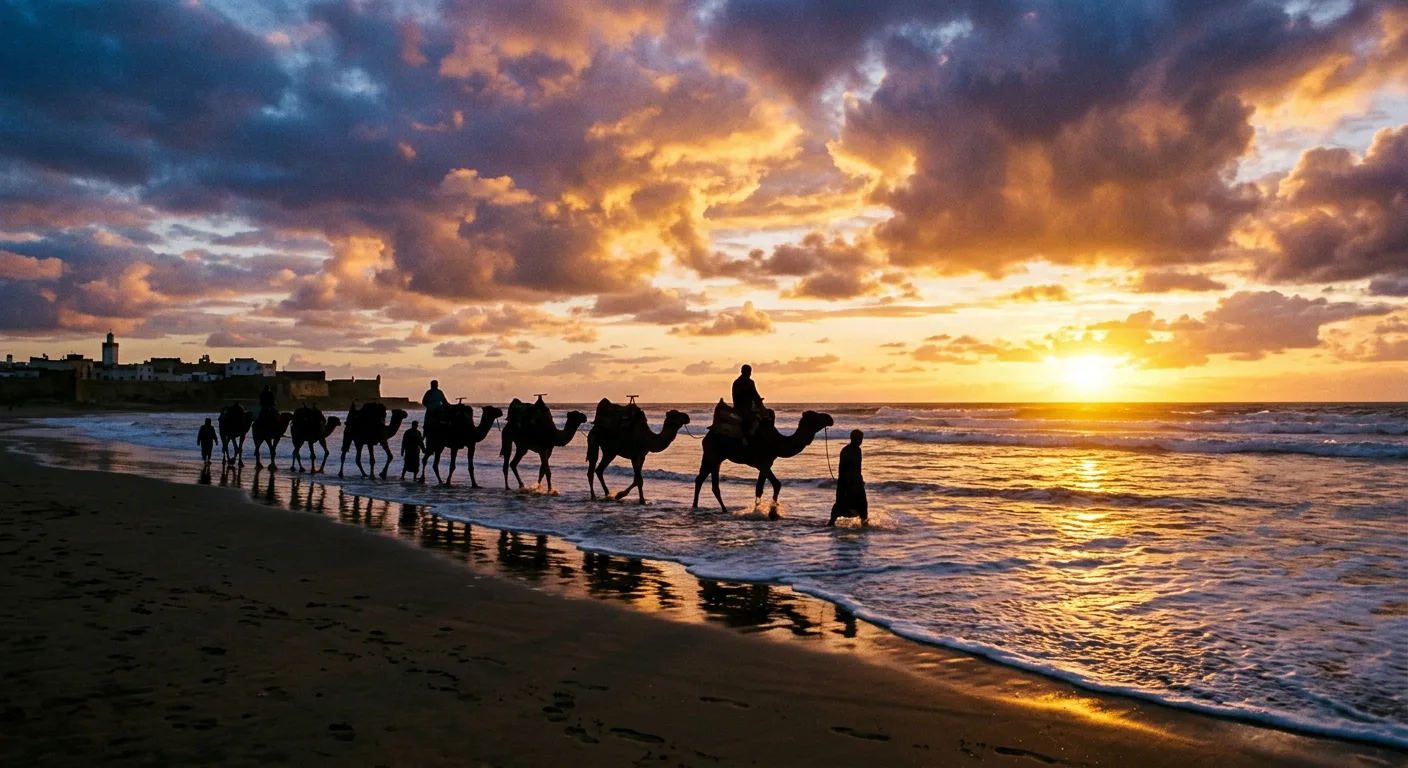
The Draa Valley and the Sahara are the trip highlight for most families. The drive south through the Tizi n' Tichka pass, down through kasbahs and palmeries, to the red dunes of Merzouga, is one of the great road journeys. Children who have ridden a camel at sunset and slept in a canvas tent under Saharan stars tend to speak of it for years.
Essaouira on the Atlantic coast is a calmer alternative to Marrakech — a blue-and-white medina by the sea, with a long sandy beach, reliable surf schools for older children, and an unhurried pace that suits families who want breathing room between sightseeing days.
How should you pace a family itinerary in Morocco?
The single most common mistake in Morocco family travel is over- programming. Morocco rewards slow movement. A family with children under ten is well served by two to three nights in each location, with one active excursion per day and one long unstructured afternoon at the riad. We typically build in a pool afternoon every second day; most Marrakech riads have a plunge pool or rooftop terrace, and children need the decompression.
For a ten-day trip: three nights Marrakech, two nights High Atlas or Ouarzazate, two nights Sahara (Merzouga), two nights heading back via the Dades Gorge, one night Marrakech. This is a full circuit and works well with children aged six and above. Younger children benefit from a simpler itinerary: four nights Marrakech, two nights Essaouira, two nights Atlas, two nights Marrakech.
What are the best riads for families in Marrakech?
Riads — the traditional courtyard houses that now serve as the city's boutique hotels — are ideal family accommodation. The interior courtyard removes street noise; the architecture is naturally child-friendly (corridors to explore, roof terraces to breakfast on); and the staff-to-room ratio is typically high, which means attentive service. Look for riads with a plunge pool enclosed by a courtyard wall, a family suite with connecting rooms, and a kitchen willing to adapt menus. We pre-inspect every riad we recommend. See our destinations guide for our current shortlist.
What should children eat and drink in Morocco?
Moroccan food is broadly child-friendly. Tagines with chicken, olives and preserved lemon; couscous with seven vegetables; harira soup; kefta (spiced minced lamb) grilled on skewers; and msemen (griddle-fried flatbreads) with honey and argan oil are all approachable, lightly spiced and made from fresh ingredients. Most riads will prepare simpler dishes on request — grilled chicken, plain rice, eggs — for young children.
Water: drink bottled water only. Tap water in Morocco is chlorinated and technically safe in cities, but the mineral balance is unfamiliar to foreign digestive systems and causes stomach upsets in a significant proportion of visitors. Fresh-squeezed orange juice from the Jemaa el-Fna stalls (US$0.50–1 a glass) is safe and excellent. Avoid ice in cafés unless you are certain it is made from bottled water.
What practical tips make travelling with kids easier in Morocco?
- Book private transport throughout — shared taxis and buses are fine for adults but exhausting with children and luggage.
- Carry a child-specific sun cream rated SPF 50+. Moroccan summers are intense; spring and autumn are more forgiving.
- Pack oral rehydration sachets as a precaution; pharmacies in Marrakech stock them, but having your own is reassuring.
- A lightweight carrier or structured backpack carrier is more practical than a pushchair in the medina's unpaved lanes.
- Brief children aged five and up on bargaining before entering the souks — it removes confusion and turns it into a game.
- Carry small MAD notes (10 and 20 dirham coins) for children to hand over during transactions — it gives them agency and makes the experience tangible.
Frequently asked
Is Morocco safe for families with young children?
It is — Morocco is a genuinely family-friendly place to travel. Children are held in enormous regard here, so families arriving with kids tend to be greeted with warmth rather than treated as a nuisance. The real things to watch are stomach upsets from unfiltered tap water (keep to bottled) and summer sun exposure. Booking private transport with a trusted driver takes away the logistical headache of steering pushchairs through the medinas.
What is the best age to take children to Morocco?
From roughly 5 years old, children get plenty out of Morocco — old enough to take in the sensory pull of the medina and to hold onto the memory of a Sahara camel ride. Toddlers manage well in riads built around interior courtyards and pools. Teenagers frequently rate Morocco among the most striking places they've been, the Sahara, the Todra Gorge and the blue lanes of Chefchaouen especially.
What should children eat in Morocco?
Most Moroccan food suits families well: tagines (slow-cooked stews), couscous, flatbreads, harira soup and grilled meats are all mild and easy to like. Ask and most riads will cook something plainer for young children. Steer clear of salads rinsed in tap water, raw street food and unpasteurised dairy off market stalls. The major bottled water brands are easy to find just about everywhere.
How long does it take to get to the Sahara with children?
Driving from Marrakech to Merzouga (the main Sahara gateway) runs nine to ten hours one-way through the High Atlas and Draa Valley — a long haul for small children. Our advice is to split it over two days in each direction, with an overnight in Ouarzazate or the Dades Valley. There's also a fly-drive route (Marrakech–Errachidia on Royal Air Maroc) that trims the overland leg down to two hours.
Can children ride camels in Morocco?
They can. Dromedary camel rides across the Sahara dunes are a real highlight for children from about 4 years old, with guides settling little ones in front of a parent. A 30–60 minute ride out to a sunset dune is comfortable, whereas full-day treks suit adults better. Stick to an operator who keeps the animals in good condition and uses proper saddles.
Do Moroccan riads have family rooms?
Most medina riads offer suites or interconnecting rooms that work nicely for families. A typical family suite sleeps two adults and two children with a private bathroom of its own. Riads built around an interior plunge pool can pose a hazard for toddlers, so ask about fencing or covers at the time of booking. A number of luxury riads run dedicated family wings with extra bedding, cots on request and children's menus.
Family itineraries from arrival
We design trips that children remember for life.
Met at the Casablanca arrivals hall, then private transport, child-inspected riads, paced days and a Sahara overnight — tell us the ages and we will build the itinerary.
Plan our family trip