
Street food is very popular in Casablanca, and you will find stalls almost everywhere. Most of it follows the clock and the calendar: msemen, harcha and sfenj in the morning, snail soup and bissara when the weather turns cold, harira and chebakia during Ramadan, and mint tea all day. This guide covers what to order at a stall or cart, when each dish is around, how to eat safely, what vegetarians can eat, and how our evening food tour fits in. For restaurants, cafés and seafood dining, see our journal piece on what to eat in Casablanca.
Casablanca street food, dish by dish
Babbouche: snail soup
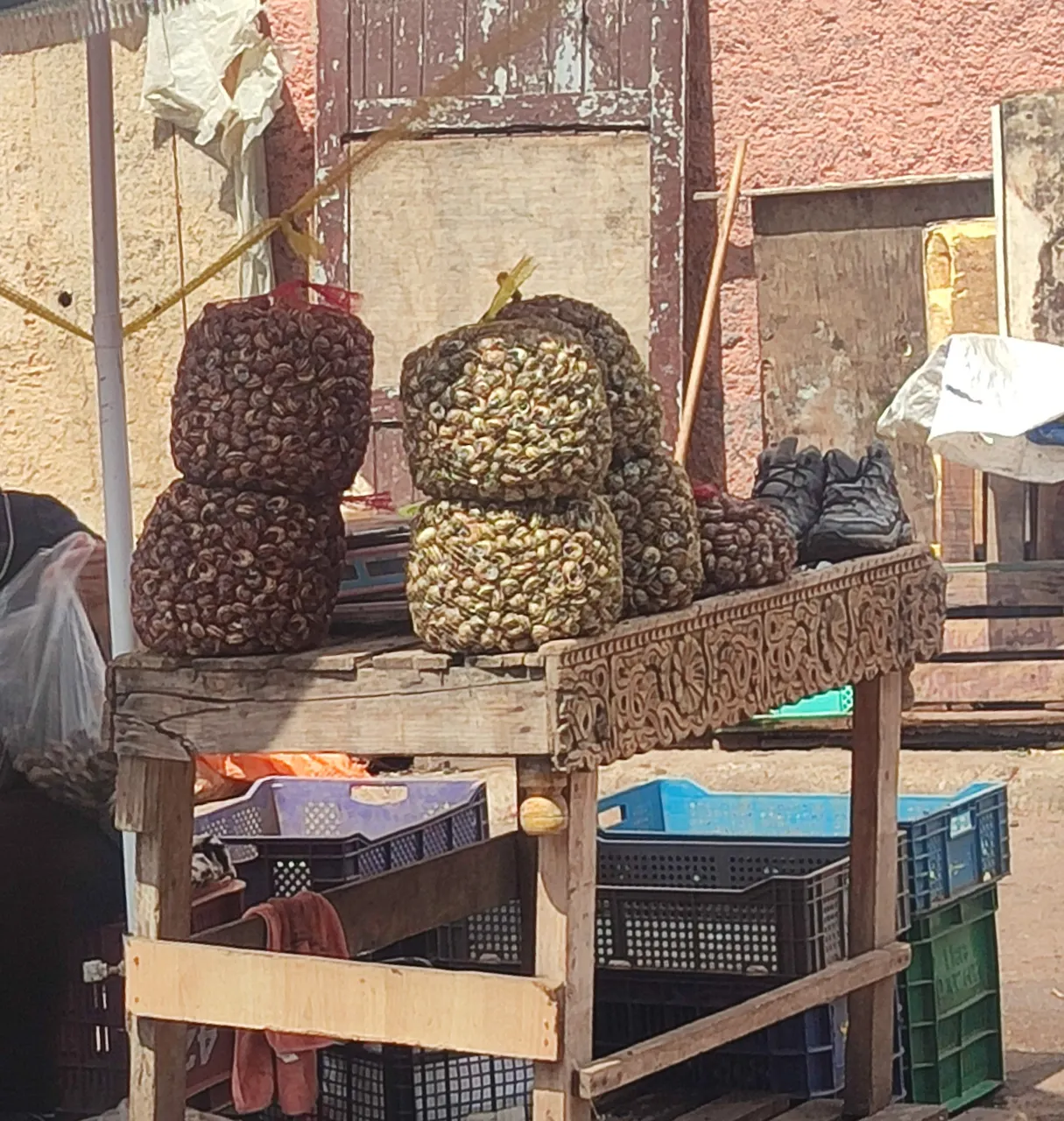
Street classic. Babbouche is the Darija word for snails, and the dish is snails simmered in a broth of about 15 herbs and spices, ladled from carts and eaten with a toothpick, with the broth drunk afterwards. Moroccans believe the broth helps digestion. A Casablanca seller told le360 in November 2018 that he works all year, but that the crowds come with winter, when customers prize the soup against the cold; bowls then cost 3 to 10 dirhams (check, as prices will have moved). A 2012 Le Matin profile of a seller in a lane of the old medina describes snails washed twice, boiled and then cooked for four hours with aniseed, liquorice, thyme, paprika, mint and orange peel bought from a herbalist at Bab Marrakech.
Msemen and harcha for breakfast
Breakfast. Msemen is thin layers of dough folded into a square and cooked on a griddle; it is eaten with honey, butter or soft cheese, or stuffed with kefta, onions or vegetables. Harcha is a big, round semolina bread cooked in a hot pan, with a slightly gritty texture, torn into pieces and dipped in honey and soft cheese. Both go with mint tea or coffee with milk, and both are morning food: look for them on griddles at breakfast time.
Sfenj: the morning doughnut
Breakfast. Sfenj is a light, spongy ring of dough fried in oil, eaten plain, sprinkled with sugar or soaked in honey. It is traditionally made and sold early in the morning for breakfast, or in the late afternoon with mint tea. Morocco World News notes that families buy it from local vendors early in the day, since homemade sfenj is rare. Eat it hot from the oil.
Bissara and chickpeas in winter
Winter. Bissara is a thick soup of puréed split fava beans with garlic, olive oil, cumin and chilli, served in a shallow bowl with more olive oil, paprika and cumin on top and bread for dipping. In Morocco it is a cold-weather dish, and le360 found it, along with hot chickpeas, among the cheap foods Casablanca turns to when winter sets in. It is also one of the most reliable meat-free things to eat on the street.
Harira and chebakia at Ramadan
Ramadan. Harira is a soup of tomatoes, lentils, chickpeas and rice with a little meat, usually on a lamb stock. It can be made all year but is mostly served during Ramadan, with dates and honey sweets. Chebakia is strips of dough folded into a rose shape, fried, soaked in honey and orange-blossom syrup and covered in sesame; it is made in large batches at the start of the fasting month and often eaten alongside harira. In Casablanca, bakeries and pastry shops are busy in the hours before the evening meal, with strong demand for chebakia, briouates and breads (Bladi, May 2021).
Sardines and street sandwiches
Lunch. Sardines are grilled or deep-fried with chermoula, a herb and spice relish, and are also stuffed into bread as sandwiches. Two other fillings to look for are maakouda, fried potato cakes with garlic, cumin, onion and coriander, and the bocadillo, a sandwich of Spanish origin usually filled with boiled egg, tuna, olives, lettuce and tomato. Expat.com's advice on Casablanca's sandwich stalls is short and fair: a quick sandwich is worth trying, but pay attention to hygiene first.
A fish lunch at the Marché Central
Market. At the Marché Central you can buy fish and seafood at the stalls and have it cooked for you, and there are small restaurants inside; the Barceló guide points to the streets around the market for cheaper places, and suggests going early and eating there. Our markets guide covers the hall itself, and the price of the cooking is worth agreeing before the fish goes on the grill.
Mint tea and Habous pastries
Sweet. Mint tea is gunpowder green tea brewed with spearmint and sugar, poured from a height into glasses, and drunk throughout the day. For something sweet with it, Pâtisserie Bennis Habous at 2 Rue Fkih El Gabbas in the Quartier Habous is a family-run bakery dating from the 1930s, selling handmade gazelle horns, honey-soaked chebakia and almond briouates (Arrival Guides). Arrival Guides lists it as open daily, 9:00 to 14:00 and 15:00 to 20:30; check that it is open and the hours before you go.
Eating safely
Health. Rough Guides advises eating only freshly cooked hot food, being careful with salads and uncooked food unless you trust the hygiene, and avoiding ice unless you are certain it is made from bottled water. In practice that means soups ladled from the pot, msemen and sfenj straight off the griddle or out of the oil, and fish grilled in front of you. Tap water in Casablanca is treated, but on a short trip bottled or filtered water is the safer choice, as our tap water guide explains. The CDC recommends hepatitis A and, for most travellers, typhoid vaccination for Morocco, and notes that washing your hands at key times also helps; carry hand gel.
Vegetarian notes
Dietary. Bissara, msemen with honey or cheese, harcha, sfenj, chebakia and maakouda have no meat in them, and msemen also comes stuffed with vegetables. Watch out for harira, which usually has a little meat and a lamb stock, for msemen stuffed with kefta, and of course for snail soup. If you do not eat eggs, ask about maakouda, which is dipped in egg before frying, and the bocadillo, which usually has boiled egg and tuna.
Fit it in: our evening food tour
Booking. Our Casablanca After Dark food tour is a three-hour evening walk with a local foodie guide, across six tasting stops that add up to a full dinner. It starts at 18:00 at the Marché Central, where you pick a fish to be grilled, then moves to the edge of the old medina for snail soup, sardine sandwiches and msemen from stalls locals trust, a sit-down plate of grilled fish or a tagine in a neighbourhood eatery, and a finish of Moroccan pastries and mint tea. Groups are two to eight, in English or French; the guide, all six tastings, mint tea and one soft drink are included. Tell us in advance and the guide swaps the meat and seafood stops for vegetarian msemen, salads, soups and pastries.
Want to taste it with a guide?
Our Casablanca After Dark food tour is a three-hour evening walk with a local foodie guide, from the Marché Central to the edge of the old medina and a pastry-and-mint-tea finish, across six tasting stops. Tell us your date, group and any dietary needs, and you get the plan and a fixed price in writing within 24 hours.
Sources
- le360: snails, bissara and chickpeas against the cold, Casablanca (3 Nov 2018)
- Le Matin: meeting the 'pharmacist', a snail seller (1 Apr 2012)
- Morocco World News: 8 traditional street foods (6 Feb 2021)
- Morocco World News: Moroccan breakfast ideas (5 Aug 2024)
- Intrepid Travel: Morocco's 10 tastiest street foods (22 May 2018)
- Wikipedia: Bissara
- Wikipedia: Harira
- Wikipedia: Chebakia
- Wikipedia: Sfenj
- Wikipedia: Maghrebi mint tea
- Bladi: Ramadan boosts Casablanca bakery sales (9 May 2021)
- Barceló travel guide: Casablanca's Central Market (undated)
- Arrival Guides: Pâtisserie Bennis Habous
- Expat.com: gastronomy in Casablanca (updated 14 Jul 2022)
- Rough Guides: travel health tips for Morocco
- CDC: Morocco traveller view (reviewed 25 Aug 2026)