
Casablanca is a working city, and most of its markets are built for the people who live here rather than for visitors. The Marché Central sells fish, produce and flowers in a 1917 market hall; Derb Ghallef is a large informal market for cheap electronics, clothing and furniture; Derb Omar is the wholesale quarter that supplies much of Morocco. The craft souk of the Quartier Habous and the stalls of the old medina are the gentler, more visitor-friendly options, and we cover each in its own guide. This page covers what each market sells, when to go, how to haggle and how to keep your phone and wallet safe.
Casablanca's markets, one by one
Marché Central: the market hall
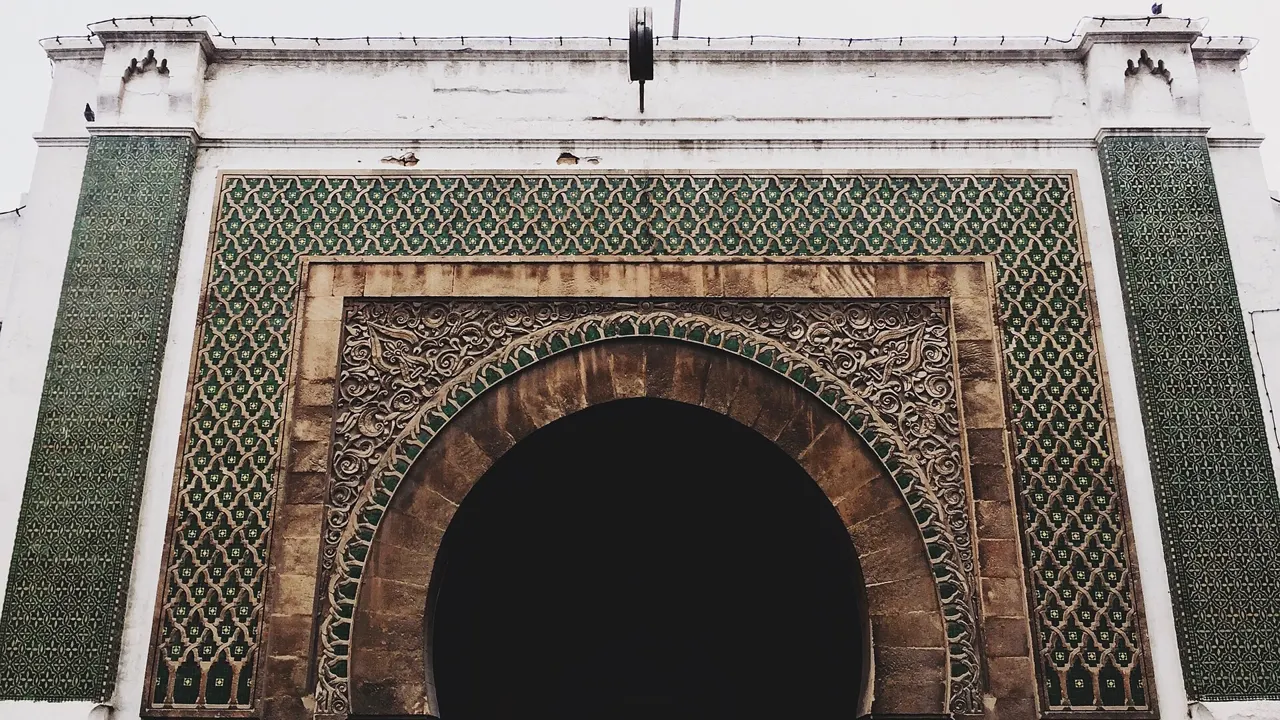
Market. The Marché Central stands on Boulevard Mohammed V, among the 20th-century buildings of the colonial-era city centre. It was completed in 1917 to a design by Pierre Bousquet, in the neo-Mauresque style, and its main gateway copies the city gates of Marrakesh, Fes, Rabat and Meknes. An octagonal cupola covers the fish hall, where the day's catch is laid out around a circular walkway and a central island. Line 1 of the tram stops right in front of the main entrance, at the Marché Central stop.
Marché Central: fish, and eating it there
Food. The fish hall sells Atlantic fish, shark meat and oysters from Dakhla, which are opened on the spot for you to eat one by one. You can buy fish and seafood at the stalls and have it cooked for you, and there are small restaurants inside the market; for cheaper places, the Barceló guide points to the streets around the market. It suggests going early in the morning and staying to eat. Agree what the cooking will cost before the fish goes on the grill.
Marché Central: produce, spices and flowers
Market. Beyond the fish hall you will find fruit and vegetables, herbs, spices, nuts, honey and oils, and butchers' counters. Flower sellers make up decorated bouquets, and a few stalls sell woven reed baskets, fossils, antiques, old black-and-white photographs and posters. For spices, Iberia Club's advice is to buy them whole rather than ground: they stay fresher and keep more flavour.
Derb Ghallef
Flea market. Derb Ghallef is a district in central Casablanca best known for the Joutia, a large informal market selling electronics and counterfeit goods at low prices, along with furniture, clothing and media; carpenters and mattress makers still work there. The old market burned down in 1982, its traders were moved to the present site in 1986 as a temporary measure, and they have stayed ever since. Another fire hit the district on 8 December 2023. In June 2025 the mayor said the city wants to buy the privately owned land and give the market a new look while keeping its character (le360). It is crowded and unpolished, so go for the experience rather than for souvenirs, and test electronics before you pay.
Derb Omar and Garage Allal
Wholesale. Derb Omar is Casablanca's wholesale quarter: about 10,000 shops in some 70 qissariat (covered trading centres), covering around 60 trades from textiles and household appliances to furniture, plastics and decoration. Goods pass through it before going out across Morocco. Up to 240 lorries a day come through its streets, some of them serving other markets such as Derb Ghallef and Garage Allal. In February 2025 le360 reported a plan, agreed with the traders, to move warehouses and lorries to a logistics zone in Médiouna, about 18 km away, with the shops staying as showrooms; no date had been set, and we have not confirmed what has happened since. It is a place of business rather than a browsing stop, and traffic in the area is heavy.
The Habous souk
Crafts. The Quartier Habous was built under the French protectorate as a 'new medina', and from the 1940s it became the centre of Muslim Casablanca. Iberia Club calls it the place for crafts and antiques, and notes caftans, djellabas and fabrics there at very different prices. Our Quartier Habous guide covers its arcades, olive stalls and pastry shops.
The old medina stalls
Market. The old medina is the walled town by the port, entered through gates such as Bab Marrakesh to the south, where traders from Marrakesh once came in, and Bab el-Mersa facing the harbour. World Travel Guide describes it as still full of stalls selling trinkets and fresh food, and far less touristy. Our old medina guide covers the ramparts, the Sqala bastion and the lanes.
When to go
Timing. Go to the Marché Central in the morning, when the fish is fresh, and stay for lunch. One guide lists its hours as 8:00 to 16:30 on weekdays and 9:00 to 18:00 at weekends; we have not confirmed this, so check. World Travel Guide gives general shop hours as Monday to Saturday, 8:30 to 12:00 and 14:00 to 18:30. During Ramadan, food shops open late in the morning, close for much of the day and reopen in the evening. We have no confirmed opening or closing days for Derb Ghallef, Derb Omar or the medina stalls, so check locally before you build a day around them.
Haggling basics
Practical. Most prices in the markets are not marked, and buyers are expected to haggle, even for fruit and vegetables (World Travel Guide). Insight Guides' advice: only start if you mean to buy, do not show how much you like the item, open at a third to a half of the first price, stay polite, and if the price is too high, thank the seller and walk away. For small sums it is often easier to pay what is asked. Do not tell a taxi driver you are going craft shopping, as some take you to shops that pay them. Our journal piece on how to haggle in the souks covers phrases and fair ranges.
Keeping your phone and wallet safe
Safety. The UK government's travel advice says petty crime is common in tourist areas, especially medina quarters, and lists pickpocketing, bag-snatching and thefts of visible jewellery and handbags by people on motorbikes. It advises not carrying large amounts of money or valuables and avoiding quiet areas after dark. In crowded lanes, keep your phone in a front pocket or a zipped bag rather than in your hand, carry only the cash you need, and decline offers from people posing as official guides.
Markets on a private day
Booking. If you want to see the markets without working out the city on your own, we can fit the Marché Central, the Habous or the old medina into a private city tour or a long layover, with your driver taking you between them and your bags kept in the car. We confirm the route, the timing and the price in writing before you book.
Want to see the markets with a driver?
We fit the Marché Central, the Habous or the old medina into a private city tour or a long layover, with your driver taking you between them and your bags kept in the car. Tell us your date and group, and you get the plan and a fixed price in writing within 24 hours.
Sources
- Wikipedia: Central Market (Casablanca)
- Barceló travel guide: Casablanca's Central Market (undated)
- Iberia Club: shopping in Casablanca (Mar 2025)
- Wikipedia: Derb Ghallef
- le360: the future of Derb Omar and Derb Ghallef, press review (3 Jun 2025)
- le360: moving the Derb Omar market, where things stand (2 Feb 2025)
- Wikipedia: Medina of Casablanca
- World Travel Guide: shopping in Casablanca
- Insight Guides: Morocco, how to haggle (21 Aug 2019)
- GOV.UK: Morocco travel advice, safety and security