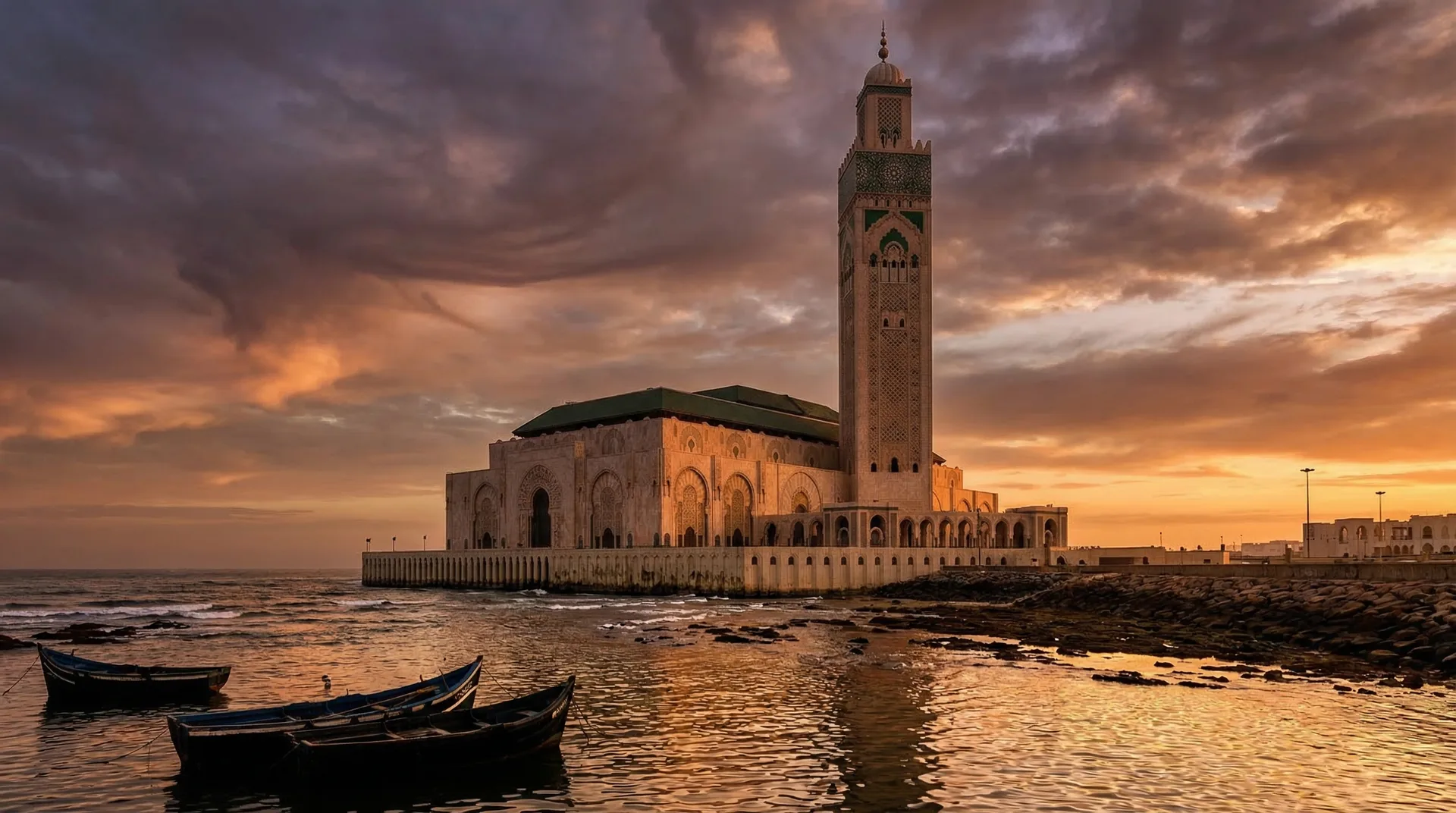
The short answer: the 2030 FIFA World Cup is being co-hosted by Morocco, Spain and Portugal, and Casablanca is one of the Moroccan host cities, with a major new stadium under construction in the area. Beyond that, almost everything a fan wants to pin down — exact match dates, which fixtures land in Casablanca, the final ticket arrangements and prices — is not yet finalised this far out. So treat this as a planning primer, not a timetable: book the things that are evergreen (a comfortable base, a sense of the city, your way around), keep the World-Cup-specific details flexible, and confirm anything time-critical against official FIFA and host-organiser announcements before you commit money to it.
Is Casablanca actually a host city?
Yes. FIFA has confirmed that the 2030 tournament will be staged across Morocco, Spain and Portugal (with a small number of celebratory opening matches planned in South America to mark the competition's centenary). Within Morocco, several cities are set to host — and Casablanca, the country's largest city and economic capital, is one of them. A vast new stadium is under construction in the Casablanca region to host matches. You may see a planned name and capacity quoted online; those details, along with the exact list of matches it will stage, are best taken from official announcements rather than treated as fixed. What is safe to say today is simple: if you want to watch World Cup football in Morocco, Casablanca is one of the places it will happen.
When and where will the matches be? (the honest answer)
The tournament is expected in 2030, in the northern-hemisphere summer window that World Cups usually occupy — but as we write, the detailed schedule has not been published. The draw, the group stages, the knockout dates and the allocation of specific fixtures to specific stadiums are all still to be confirmed. That means anyone quoting you a precise Casablanca match date right now is guessing. Our advice: don't build a non-refundable trip around an unconfirmed fixture. Watch the official FIFA channels and the host-country organisers for the schedule release, and only lock in flights and hotels around a date once it is officially confirmed.
How early should I plan and book?
Early — earlier than feels necessary. Big tournaments concentrate enormous demand into a few weeks and a handful of cities, and Casablanca's hotel stock, while large, will feel tight when it matters. A sensible sequence:
- Tickets first, and only officially. Buy match tickets exclusively through official FIFA channels when the sale windows open. Unofficial resellers and "guaranteed" ticket-plus-hotel packages from unknown operators are the classic way fans get burned around a World Cup.
- Keep dates flexible until the schedule lands. Favour refundable or free-cancellation accommodation and flexible fares while fixtures are still to be confirmed.
- Book accommodation as soon as you have a confirmed reason to. Once your dates are real, secure a place quickly — the best-located, fairly priced rooms go first.
- Sort transport thinking early. Decide whether you'll rely on the tram and trains, or want private transfers for match days, well before you arrive.
Where should I stay in Casablanca?
Casablanca isn't a compact medina town; it's a sprawling modern city, so where you base yourself matters. For most visitors the Art-Deco city centre and the Gauthier and Maarif districts are the sweet spot — walkable, full of restaurants and cafés, and close to the Casa Tram and Casa-Voyageurs station. The Ain Diab Corniche suits travellers who want the seafront, the sunsets and the nightlife. During the tournament, expect unusually high demand and prices, so don't assume you must be right next to the stadium — being a short tram or train ride away, in a well-connected neighbourhood, is often the smarter, cheaper choice. Our neighbourhood guide to where to stay in Casablanca walks through each area in detail.
What to do in Casablanca beyond the football
A World Cup trip is mostly the hours between matches, and Casablanca rewards them. The unmissable sight is the Hassan II Mosque — one of the largest mosques in the world, built partly out over the Atlantic, with one of the tallest minarets anywhere. It is open to non-Muslim visitors on guided tours, and it is genuinely breathtaking. Beyond it, give yourself time for:
- The Art-Deco and Mauresque downtown — Casablanca has one of the great concentrations of early-20th-century architecture in Africa, best seen on foot around the old centre and Place Mohammed V.
- The Ain Diab Corniche — the seafront promenade for a walk, a coffee and the sunset over the ocean.
- The food — Atlantic seafood, the Marché Central where you choose your fish, French-era brasseries and modern Moroccan tables. See our guide to what to eat in Casablanca.
- The Habous quarter and the old medina — a more traditional, walkable counterpoint to the modern city.
If your time is tight between fixtures, our how-many-days-in-Casablanca guide helps you prioritise.
Day trips around the matches
One of Casablanca's quiet advantages as a World Cup base is how easy it is to escape for a day. Rabat, the national capital, is under an hour away by train and is itself expected to be a host city — an obvious pairing. The Portuguese cistern at El Jadida, the oyster lagoon at Oualidia and the walled coastal towns down the Atlantic all make comfortable days out. Marrakech is around 240 km away and, in our view, is better as an overnight than a rushed day trip — but it is very much within reach. Our roundup of the best day trips from Casablanca has honest distances and times for each.
Getting around — and the transport build-out
Day to day, Casablanca runs on the modern Casa Tram network, red petits taxis, ride apps, and the train, with two central stations — Casa-Voyageurs (long-distance) and Casa-Port (downtown). The city's main gateway is Mohammed V International Airport (CMN), which has its own train link into town. Our getting-around-Casablanca guide covers all of it.
Looking ahead to 2030, Morocco is investing heavily in transport — airport expansion, road upgrades and rail. The high-speed Al Boraq line currently runs Tangier–Kenitra–Rabat–Casablanca, and an extension onward towards Marrakech (via Kenitra) is under construction, with the tournament an explicit motivation. A lot of this is still being built, so exact opening dates, new routes and stadium transport arrangements should be treated as targets to confirm closer to the time, not promises. The direction of travel, though, is clear: getting around should be easier in 2030 than it is today.
Is it safe and easy to visit?
Casablanca is a big, modern, cosmopolitan city that already hosts international business and major events, and most visitors find it straightforward and welcoming. The usual city-travel sense applies: keep an eye on your belongings in crowds, use official or app-based taxis, carry a little cash for small payments, and dress with ordinary respect, especially around religious sites. Around match days, plan for heavier traffic and busier transport and give yourself buffers. For the broader national picture, our honest guide to whether Morocco is safe is worth a read before you travel.
A planning checklist (hedged on purpose)
- Confirm the schedule officially before booking around a fixture — dates and venue assignments are to be confirmed by FIFA and the organisers.
- Buy tickets only through official FIFA channels when sales open; avoid unofficial resellers and unknown package operators.
- Book flexible accommodation early and don't fixate on being next to the stadium — a well-connected neighbourhood is usually better value.
- Check entry requirements (visa rules, passport validity) for your nationality closer to the time, as policies can change.
- Plan match-day transport in advance — decide between the tram/train and private transfers, and allow extra time.
- Build a non-football itinerary too — the mosque, the city, day trips — so the days between matches are part of the trip, not dead time.
We're a Casablanca-based team, and as the 2030 picture firms up we'll keep these notes current. In the meantime, if you want a hand shaping a trip around the city — a base, transfers, day trips and the sights between matches — browse our private tours or just get in touch and we'll help you plan. To get oriented first, start with things to know before visiting Casablanca.
Frequently asked
Is Casablanca a host city for the 2030 World Cup?
Yes. The 2030 FIFA World Cup is being co-hosted by Morocco, Spain and Portugal, and Casablanca — Morocco's largest city — is one of the Moroccan host cities. A major new stadium is under construction in the Casablanca area to host matches. Exactly which matches are played there, on which dates, and the stadium's final details are set by FIFA and the local organisers and are best confirmed from official announcements rather than treated as settled.
When and where will the Casablanca matches be played?
The tournament is expected to take place in 2030, but the detailed match schedule, kick-off dates and the final allocation of fixtures to each venue had not been finalised at the time of writing. Treat any specific dates, group draws or venue assignments you read as provisional. For anything you intend to book a flight or hotel around, check the official FIFA and host-organiser announcements for confirmation.
How early should I start planning a Casablanca World Cup trip?
As early as you realistically can. Major tournaments push accommodation and transport into very high demand, and prices rise as the event nears. It is sensible to watch official channels for the ticket-sale windows, keep your travel dates flexible until the schedule is confirmed, and look at refundable or flexible accommodation. Only buy match tickets through official FIFA channels when they go on sale — avoid unofficial resellers, which are a common source of scams around big events.
Where should I stay in Casablanca for the World Cup?
For a first visit, the Art-Deco city centre and the Gauthier/Maarif districts put you near the tram, restaurants and Casa-Voyageurs station; the Ain Diab Corniche suits travellers who want the seafront and nightlife. During a tournament, demand and prices will be unusually high, so book early and consider staying a tram or train ride out from the stadium rather than insisting on being next to it. Our neighbourhood guide to where to stay in Casablanca goes through the trade-offs in detail.
What is there to do in Casablanca besides football?
Plenty. The Hassan II Mosque — one of the largest in the world, set dramatically over the Atlantic and open to non-Muslims on guided tours — is the city's signature sight. Add the Art-Deco and Mauresque downtown, the Ain Diab Corniche, the food scene from the Marché Central to port seafood, and the Habous quarter. Casablanca also makes a comfortable base for day trips, so there is more than enough to fill the gaps between matches.
Is Casablanca safe and easy to visit for the World Cup?
Casablanca is a large, modern, cosmopolitan city that already handles international business travel and big events, and most visitors find it straightforward. Standard city-travel sense applies — mind your belongings in crowds, use official or app-based taxis, and keep some cash for small payments. Expect heavier traffic and fuller transport around match days, so build in buffers. For the wider national picture, our honest Morocco safety guide is a good companion read.
Planning a 2030 trip already?
Let a Casablanca-based team build the trip around your matches.
From a well-placed base and airport pickups to private transfers on match days and day trips to Rabat or the coast between fixtures — we'll shape it around the schedule once it's confirmed, and keep everything flexible until then.
Start planning