The short answer: not in the way most people hope, and that's fine. The 1942 classic — Humphrey Bogart and Ingrid Bergman, "Here's looking at you, kid" — was filmed entirely on the Warner Bros. backlot in California, not a single frame in Morocco. So the smoky, romantic Casablanca you picture is a Hollywood set. The real city is a big, modern Atlantic metropolis with its own pleasures: a colossal seafront mosque, a dazzling Art-Deco downtown, and — yes — a real Rick's Café built decades later as a knowing tribute. Adjust your expectations and Casablanca delivers handsomely.
The myth, in one line
The film made Casablanca a byword for wartime romance and intrigue — but it was a story set in Casablanca, not shot in it. Going in with that knowledge is the difference between a disappointed visitor and a delighted one. For the broader reality check on the city, pair this with our things to know before visiting Casablanca.
Where the film was actually made
Casablanca was a studio picture, made at the height of the Second World War when shooting abroad was impossible. The streets, the bazaar, Rick's gin joint and the famous rain-soaked airport farewell were all sets, miniatures and the Warner Bros. backlot in Burbank, with a few exteriors around Los Angeles. The fog that drifts through the final scene? Studio fog. The plane? A small cut-out, with crew used in the background to fake its scale. It is one of cinema's great illusions — and it means the on-screen city is not a place you can walk into, however much you want to. (A note for the purists: nobody in the film ever actually says "Play it again, Sam.")
But Rick's Café is real
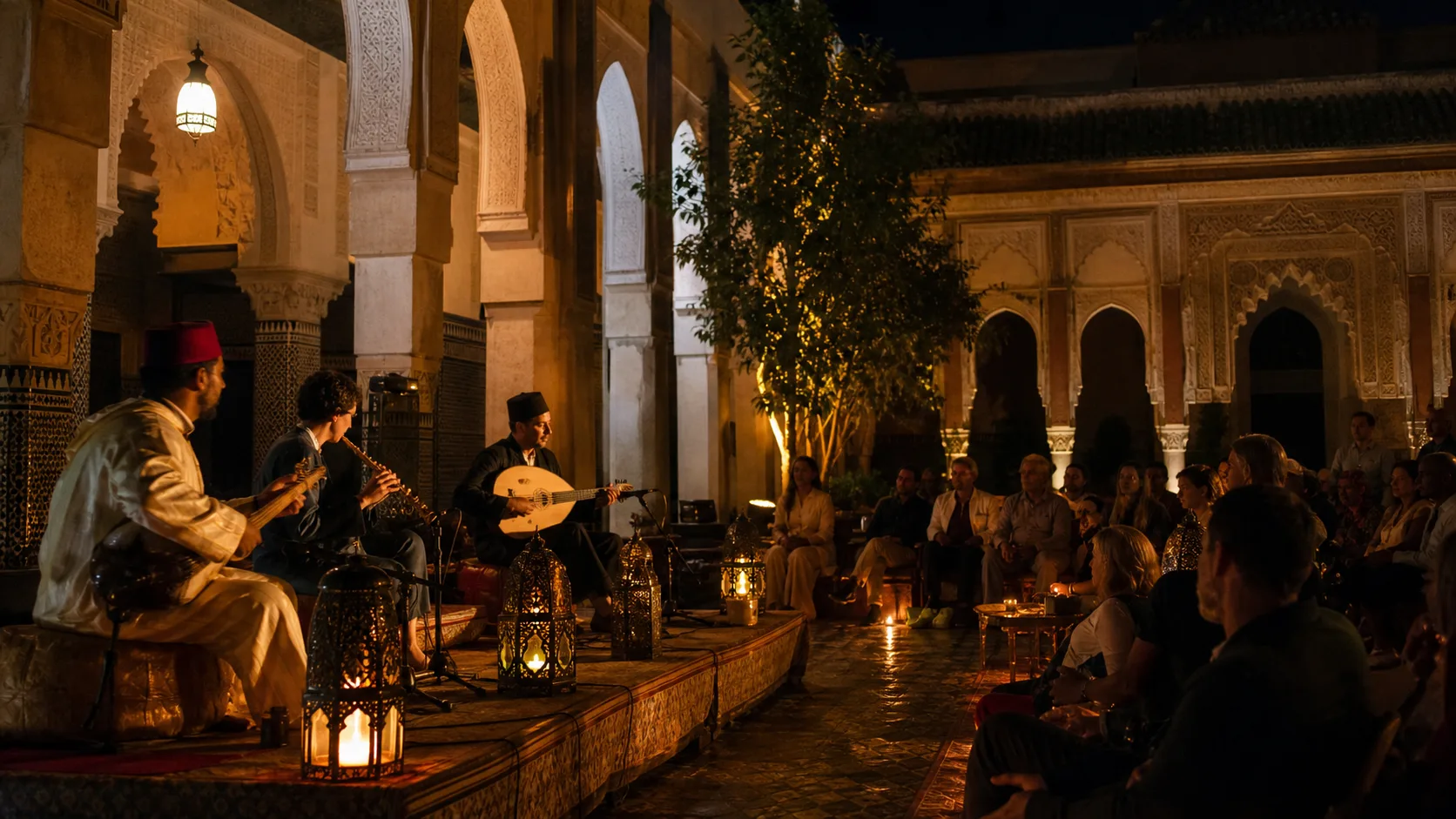
Here is the lovely twist. Rick's Café Américain was invented for the film, but in 2004 an American former diplomat, Kathy Kriger, made it real, opening a restaurant of the same name inside a restored 1930s mansion near the old medina and the port. It recreates the mood of the movie on purpose — arched doorways, a curved bar, brass lanterns, soft light and a pianist who, of course, plays "As Time Goes By." It is a homage rather than a location, and it carries it off with real affection. If a film-themed evening is the heart of your visit, our Rick's Café & film-locations tour builds the story and the setting into one outing. Reserve ahead, dress smart-casual, and aim for when the piano is playing.
So what is the real Casablanca like?
Real, busy and modern — Morocco's largest city and its commercial capital, not a period piece. The single unmissable sight is the Hassan II Mosque, an immense building standing partly out over the Atlantic, its minaret rising around 210 metres; completed in 1993, it is the only mosque in Morocco that non-Muslims can tour. Add the seafront Ain Diab Corniche, the old medina, and the graceful Quartier Habous (the "new medina"), and you have a city that is layered and characterful in its own right. It is also one of the country's best places to eat — see our what to eat in Casablanca guide for the seafood and café culture.
The closest thing to the film's era
If you want to feel the period the movie conjures, skip the screen and look up at the buildings. Casablanca came of age in exactly the French-protectorate decades the film is set in, and its downtown holds one of the planet's richest collections of 1920s and 1930s Art-Deco and Mauresque architecture — old cinemas, the former town hall, apartment blocks with wrought-iron balconies and a romantic, slightly faded grandeur. Walking these streets, ideally with someone who can explain how a small port became this cosmopolitan city, is the most authentic way to touch the era. A guided Art-Deco walking tour does precisely that.
Seeing the "movie" Casablanca in a day
The film-lover's itinerary is compact: the Hassan II Mosque, a wander through the Art-Deco centre, and a drink or dinner at Rick's Café. That fits comfortably into half a day to a day — which is about how long most travellers spend here, as our how many days in Casablanca piece explains. It even works as a long layover: if you're connecting through Mohammed V Airport with time to spare, the layover guide shows how to do it without missing your flight. Either way, you'll leave with the real city in your memory and the movie's spell happily intact.
We're a Casablanca-based team and we love this particular question, because the answer is more interesting than a simple yes or no. If you want a film-themed evening done properly — or the real city threaded around it — see what we offer in Casablanca or just get in touch.
Frequently asked
Was the movie Casablanca actually filmed in Casablanca?
No — almost none of it. The 1942 film was made on sound stages at the Warner Bros. studios in Burbank, California, with the few exterior shots done around Los Angeles, not in Morocco. Hollywood was at war and travel was out of the question, so the foggy streets, the bazaar and the famous airport finale were all built sets, miniatures and studio backlots. The Casablanca you fall for on screen is a beautifully art-directed illusion. The real city is a working Atlantic metropolis — which surprises a lot of first-time visitors who arrive expecting the noir version.
Is there a real Rick's Café in Casablanca?
Yes, but it came after the film, not before it. Rick's Café Américain was fictional in the movie; the real Rick's Café opened in 2004, created by an American former diplomat, Kathy Kriger, inside a restored 1930 mansion near the old medina and the port. It deliberately evokes the film — arches, a curved bar, brass lanterns, low lighting and a pianist who plays 'As Time Goes By'. It is a loving tribute rather than a film location, and it knows it. Booking ahead is wise, especially for an evening table when the piano is playing.
If the city isn't like the film, what is Casablanca actually like?
It is Morocco's largest city and its economic engine — modern, busy, cosmopolitan and unmistakably real rather than romantic. The headline sight is the colossal Hassan II Mosque, standing partly over the Atlantic, with a minaret of around 210 metres; it was completed in 1993 and is the one mosque in Morocco that non-Muslims can tour. Around it you'll find a remarkable 1920s–30s Art-Deco and Mauresque downtown, the seafront Corniche at Ain Diab, the old medina and the elegant Quartier Habous. Come for that, plus the food, and Casablanca rewards you on its own terms.
What's the closest thing to the film's era you can still see?
The architecture. Casablanca grew up in the French-protectorate decades that frame the film, and its downtown is one of the world's great concentrations of 1920s and 1930s Art-Deco and Mauresque buildings — cinemas, the old town hall, apartment blocks with wrought-iron balconies and faded grandeur. Walking these streets is the most genuine way to feel the period the movie evokes, far more than any café tribute. A guided Art-Deco walk threads the best of it together with the history of why a sleepy port became this cosmopolitan, layered city in the first place.
Is Rick's Café worth visiting?
If you love the film, yes — go knowing exactly what it is. It is an atmospheric homage built for the pleasure of the reference, not a historic site, so you are paying partly for the mood, the piano and the photographs on the wall. The setting is genuinely lovely and the staging is done with affection; treat it as a fun dinner or a drink rather than a pilgrimage to a real location and you'll enjoy it. Reserve in advance, dress smart-casual, and time it for when the pianist plays if the music is the part you care about.
Can I see the movie's highlights on a layover or a short stop?
Easily. The film-lover's shortlist — the Hassan II Mosque, a wander through the Art-Deco centre, and a drink or dinner at Rick's Café — fits comfortably into half a day to a day, which is roughly how long most visitors give Casablanca anyway. If you're connecting through Mohammed V Airport (CMN) with hours to spare, it's very doable, provided you keep an honest buffer for immigration and the city's traffic. Our layover guide lays out the timings; the short version is that the mosque plus a film-themed evening is a satisfying, self-contained Casablanca.
For the film lovers
Of all the gin joints — let us help you find the real one.
Tell us your dates and we'll build a Casablanca day around the things that actually deliver: the Hassan II Mosque, the Art-Deco streets, and an evening at Rick's Café when the piano is playing — with the logistics handled and pricing agreed in advance.
Plan my trip